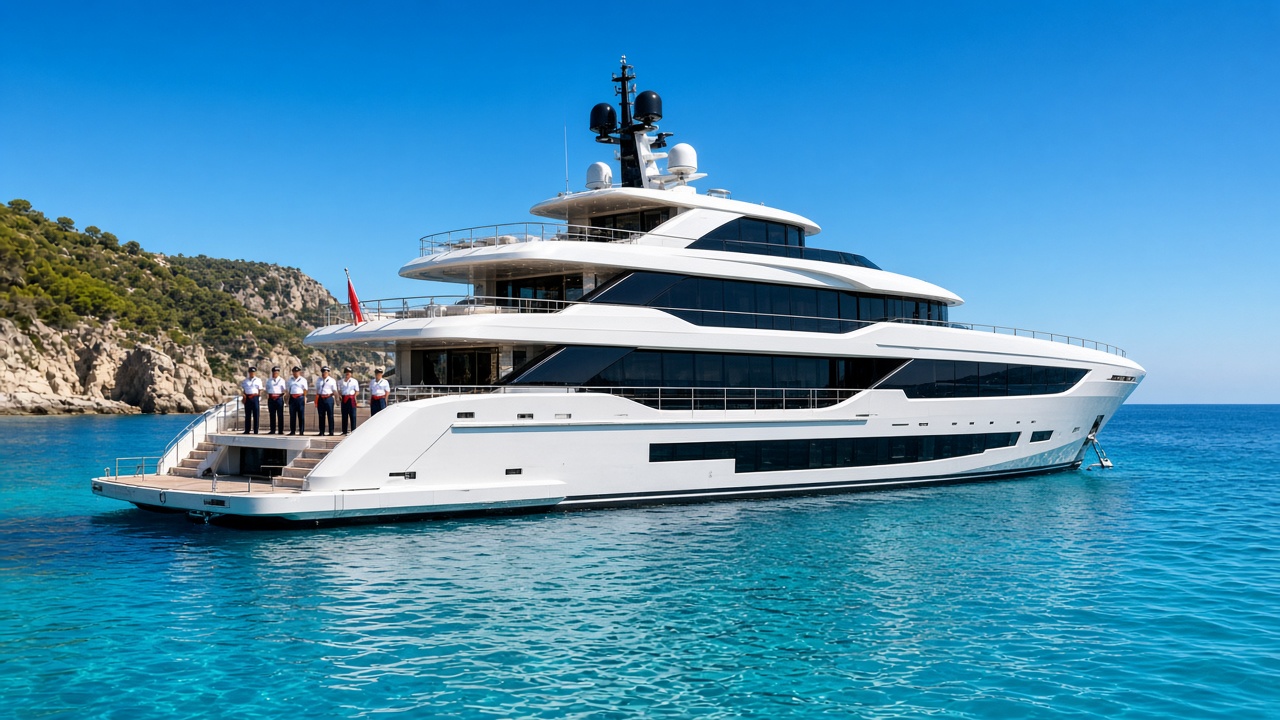
Superyacht Crew Salaries 2026: What Each Role Does and Earns

2026 superyacht crew pay by role and yacht size, from junior deckhand to captain, plus what each job involves and how to climb the ladder faster.
Ask ten crew what a stewardess or a chief engineer earns and you'll get ten answers, most of them half-remembered from a crew mess conversation in Antibes. So let's put some real 2026 numbers on the table, explain what each role actually involves, and talk honestly about how you move up the ladder.
This is the first post in a series I'm calling what each role does, where we'll go department by department. Today: the big picture across deck, engineering, interior and galley, with current pay benchmarks.
A quick health warning before the numbers. Salary guides are indicative, not contracts. Yacht size, private versus charter use, cruising programme, rotation, flag, your certificates and your references all move the figure. Use these ranges to benchmark, then negotiate the package, not just the base.
Where the 2026 numbers come from
I've drawn on two published 2026 sources:
- Northrop & Johnson's 2026 Yacht Crew Salary Guide, which lists monthly ranges in US dollars by yacht size.
- Superyacht Guide's Superyacht Crew Salaries 2026 (31 August 2026), which gives indicative monthly starting ranges in euros, before tips, bonuses and personal tax.
Where I quote figures below, I say which source they're from. All figures are monthly.
Deck department
What they do: the deck team keeps the yacht looking immaculate and running safely: washdowns, varnish and paintwork, line handling, anchoring, tender and toy operations, and guest watersports. On the bridge, officers handle navigation, watchkeeping and safety management.
- Junior deckhand: Northrop & Johnson lists $3,500 across all yacht sizes. Superyacht Guide puts it at €3,000–€3,200 on 30–60m yachts.
- Bosun: runs the deck crew day to day. $3,500–$4,500 on 30–40m, rising to $5,000–$6,000 on 100m+ (N&J).
- Chief officer / first mate: the captain's right hand, responsible for deck operations and safety. $4,500–$7,000 on 30–40m and $9,000–$12,000 on 80–100m (N&J).
- Captain: $9,800–$16,375 on 30–40m and $26,200–$32,800 on 80–100m, with 100m+ listed as discretionary (N&J). Superyacht Guide's euro ranges run from €6,000–€9,000 on 30–40m to €16,000–€23,000 on 80–100m.
Northrop & Johnson also lists a "specialised deckhand" category at $3,500–$5,500, covering roles such as tender driver, kite surfer, carpenter, diver, videographer and photographer. That's my favourite line in the whole guide, because it tells you exactly how to beat the junior rate: bring a skill.
How to progress: STCW Basic Safety Training and a seafarer medical (ENG1 or an accepted equivalent) get you in. From there it's sea time plus deck tickets towards Officer of the Watch and beyond. On bigger yachts the ladder is clearly defined (deckhand, lead deckhand, bosun, third, second and chief officer), which is one reason I keep telling people to aim for larger boats once they have a season or two behind them.
Engineering department
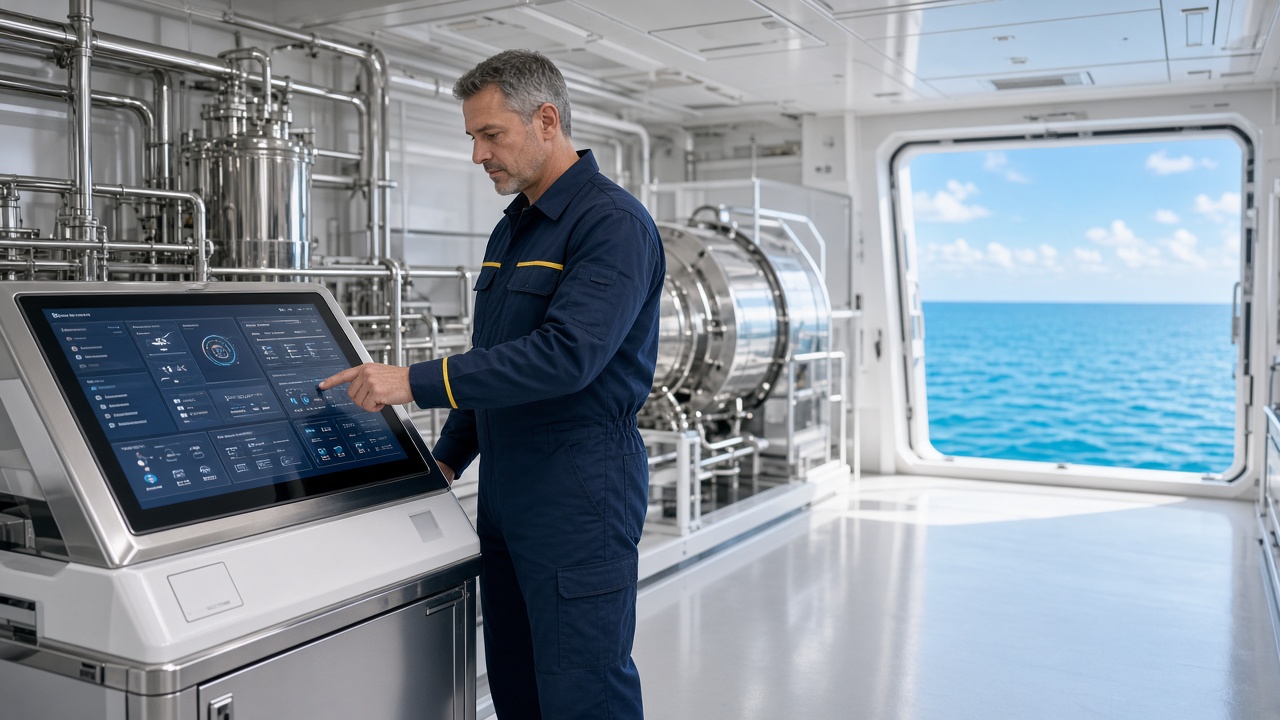
What they do: everything that moves, powers, cools, cleans or connects the yacht. Main engines and generators, hydraulics, water makers, HVAC, sewage treatment, and on modern builds, hybrid systems and battery banks.
- Chief engineer: $6,000–$8,000 on 30–40m, $9,000–$13,000 on 50–60m and $15,000+ on 80m and up (N&J).
- Second engineer: $4,500–$5,000 on 40–50m, up to $7,500–$9,000 on 80–100m (N&J).
- ETO and AV/IT: $7,000–$8,500 on 60–80m and $8,500–$10,000+ on 80–100m (N&J).
Look at that ETO and AV/IT line. On a large yacht, the person who keeps the networks, satellite comms, entertainment and integrated bridge systems running can out-earn a second engineer. Yachts are floating smart buildings now, and this is one of the most forward-looking career paths on board. If you're a shoreside electrician, network engineer or AV integrator, yachting wants to hear from you.
How to progress: engineers climb through recognised yacht or merchant engineering certificates, and senior roles carry statutory responsibility. That responsibility is exactly why, as Superyacht Guide notes, the strongest pay growth sits in roles with command, statutory or highly specialised responsibility.
Interior department
What they do: guest experience, full stop. Housekeeping, laundry, table service, cocktails, event styling, inventory, provisioning and, at the top end, running a hotel-grade operation with its own budget.
- Junior stew: $3,500 across sizes (N&J); €3,000–€3,500 (Superyacht Guide).
- Second stew: $3,500–$4,500 on 30–40m, rising to $6,500+ on 80m and up (N&J).
- Chief stew: $6,000–$8,000 on 30–40m and $10,000+ on 80m and up (N&J).
- Purser: $7,000–$8,500 on 60–80m and $8,500+ on 100m+ (N&J).
Specialist interior roles are where things get interesting. N&J lists spa therapists at $7,500–$10,000 on 80–100m yachts and nurses at $5,500–$6,500 on the same size. If you hold a professional qualification ashore, there may be a premium version of your job waiting on the water.
Galley
What they do: feed guests to a Michelin-level standard and feed crew well enough to keep morale high, often from the same small galley, on a rolling sea, with a provisioning challenge at every new port.
- Head or sole chef: $5,000–$6,000 under 30m, $6,000–$9,000 on 30–40m and $15,000+ on 80m and up (N&J).
- Sous chef: $5,000–$7,000 on 40–50m, $9,000+ on 80m and up (N&J).
Chefs are one of the clearest examples of how responsibility drives pay. A sole chef on a 40m charter yacht is running the whole food programme alone. That's a big job, and the pay reflects it.
Rotation, leave and the real package
Base salary is only half the story. Superyacht Guide reports that equal rotation has become common for captains, senior officers, senior engineers and chefs on many yachts above 50 or 60m. Quay Crew's Captain Salary & Leave Report 2025/26 found more than half of captains now receive business-class travel on long-haul routes.
When you compare offers, ask about:
- rotation or annual leave, and whether it's written into the contract
- charter tips policy and how they're split
- medical insurance and flights home
- training budget and support for your next ticket
- whether there's a proper employment agreement (the Maritime Labour Convention sets the baseline for seafarers' employment agreements)
My take
Here's what I find genuinely exciting: the highest-growth roles in yachting are the technical and specialist ones. ETOs, AV/IT officers, specialist deckhands, spa and medical professionals. That means there are more ways in than ever, and more ways up.
My practical advice is simple. Pick a department, get your entry certificates done, and then deliberately build one specialism that makes you worth more than the base rate. Then aim for larger yachts, where the structure gives you a ladder to climb.
Next in this series, we'll go deep on one role at a time, starting with the deck department. In the meantime, browse the latest superyacht jobs and see where your skills fit.
Sources: Northrop & Johnson 2026 Yacht Crew Salary Guide (USD); Superyacht Guide, 31 August 2026 (EUR); Quay Crew Captain Salary & Leave Report 2025/26.