Lürssen's Record Year: What New Superyachts Mean for Crew
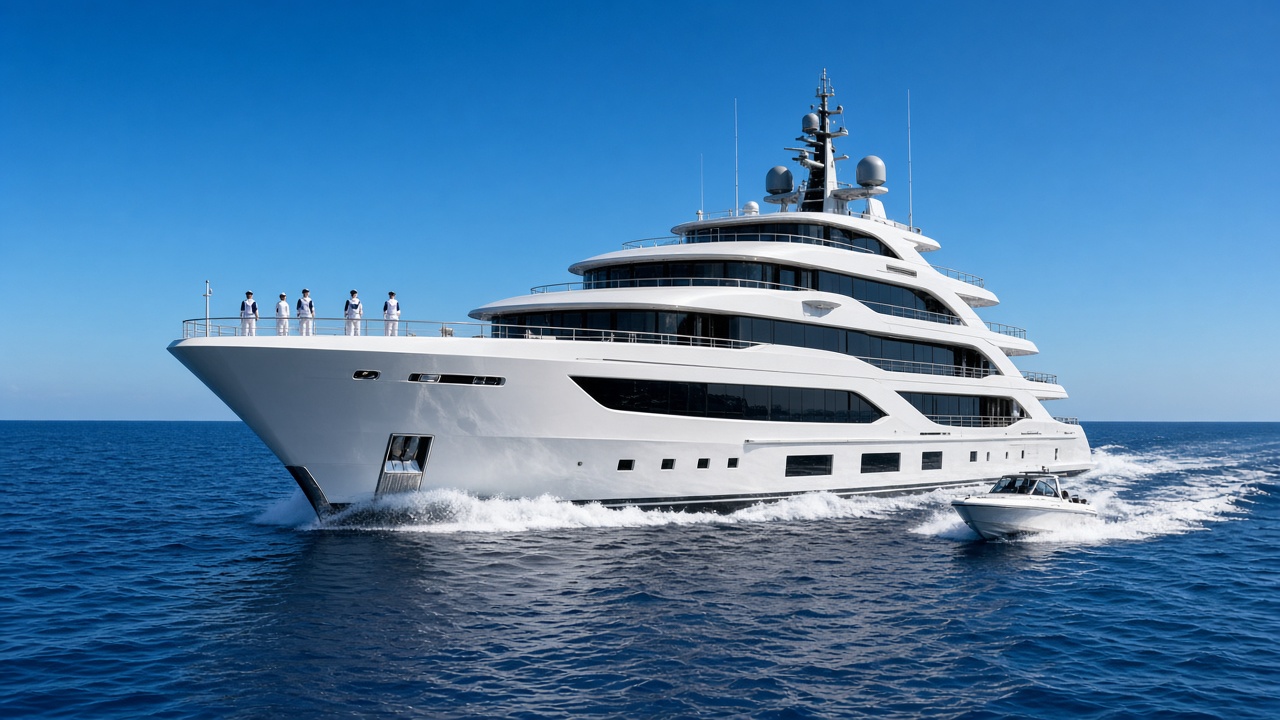
Lürssen handed over a record six superyachts in 2026, plus new Admiral, Gianetti and Gulf Craft deliveries. What the new yachts mean for crew jobs and skills.
Every time a new superyacht leaves a shipyard, a brand-new workplace opens up. Somebody has to drive it, run its engines, keep its batteries happy, polish its decks and look after the guests. That's why I read delivery news the way other people read job ads.
And this past week's delivery news has been brilliant.
On 9 November, Superyachts.com reported that Lürssen has handed over six superyachts this year, a record for the German yard, and five of them are more than 100 metres long. In the same week, Admiral delivered the 53.5-metre Silvia, Gianetti delivered the 38-metre ONeiro I, and Gulf Craft handed over its latest Nomad 101 at the Qatar International Boat Show.
That's a lot of new berths, and every one of these yachts needs a crew. Here's what this run of deliveries tells us about where yacht jobs are heading, and how to put yourself in front of them.
Lürssen's six: a record year at the big end
Let's start with the headline. According to Superyachts.com, Lürssen's 2026 deliveries are:
- Deep Blue (134.2m), the largest, delivered this year after a launch that marked the yard's 150th anniversary
- Boardwalk (117m), where part of the main deck slides open to reveal a stairwell down to the beach club, which Lürssen says is a first for the yard
- Nausicaä (114.2m), designed inside and out by Marc Newson and delivered in May
- O3 (109m), a rugged explorer that took almost eight years to complete
- Nixie (102.4m), with a 270-square-metre beach club and a hybrid diesel-electric system with battery storage
- Odisea (78m), with big glass walls, two open-air cinemas, and the first complete yacht RWD has designed for Lürssen
Nausicaä is the one that gets the engineers talking. She carries two 500kW methanol fuel cells, fitted at the owner's request, which turn methanol into electricity so she can run with lower emissions for longer stretches and cruise silently for limited periods. She's also strengthened for light ice, which opens up more remote cruising grounds.
And Lürssen isn't slowing down. Project Elusive, a 122.5-metre yacht being built in Bremen, was announced as sold in August and is due in 2030. Project M, announced in September, will be longer than 125 metres and is due in May 2032.
What it means for crew: yachts over 100 metres are small hotels with a marine engineering plant attached. They run big, departmental crews, with rank structures that simply don't exist on a 40-metre boat: first officers and chief officers, first engineers, ETOs, AV/IT officers, head of service, pursers, spa therapists, security and medical roles. Five 100m+ yachts arriving in one year from one yard means more of those senior, specialised and very well-paid seats. If you're a third officer or second engineer wondering where the next step up is, this is it.
The rest of the week: Admiral, Gianetti and Gulf Craft
Big yachts get the headlines, but most crew jobs are on yachts between 30 and 60 metres. This week delivered across that range too.
Admiral Silvia (53.5m): hybrid goes mainstream
Superyacht Times reported on 6 November that the 53.5-metre Admiral Silvia has been delivered to her owner after launching in July. YachtBuyer's write-up has the detail I care about as a crew person: her e-MOTION hybrid system pairs twin MAN diesels with electric motors, variable-speed generators and lithium-polymer batteries. She can run hotel operations on battery for about eight hours with no local emissions, and manoeuvre on electric power alone in port.
There's plenty to keep the guest-facing crew busy too: a beach club with a sunken infinity pool and fold-down terraces, an observatory deck, an elevator from the main accommodation up to the sun deck, and a bow garage holding a 7.5-metre tender, two Jet Skis and more toys. That's a deck team that will be launching, driving and maintaining a lot of kit.
Gianetti ONeiro I (38.35m): proof that conventional still sells
Superyacht Guide's report on 6 November covers Gianetti Custom Yachts' delivery of the 38.35-metre aluminium ONeiro I. She sleeps ten guests in five staterooms and lists seven crew, with three double crew cabins below and a captain's cabin near the wheelhouse.
Interestingly, yard principal Fabrizio Gianetti argued in favour of familiar diesel machinery (twin Caterpillar C32s) and questioned whether a big battery-hybrid set-up made sense for this owner's profile. I like that honesty. Not every yacht will be hybrid, and engineers who know conventional plant inside out are still in demand. There's even a five-metre counter-current pool on the sun deck holding roughly 6,000 litres of water. Somebody on that seven-person crew is going to become very good at pool chemistry.
The yard's sister hull, Project 402, is already far enough along to float, with a 24-month delivery programme advertised.
Gulf Craft Nomad 101 (31m): the Middle East market keeps growing
Superyacht Guide reported Gulf Craft's handover of its latest redesigned Nomad 101 at the Qatar International Boat Show, held at Old Doha Port from 4 to 7 November. It's a 30-metre-class yacht designed for extended time aboard and multi-generational families. For crew, yachts like this are classic first and second jobs: small teams, everyone multi-skilling, and a fast way to learn.
The big theme: hybrid and alternative power is creating new skill demands
Put Nixie, Nausicaä and Silvia side by side and the direction is obvious. Batteries, fuel cells and diesel-electric plant are no longer one-off experiments. They're on yachts being delivered right now, from 53 metres to 114 metres.
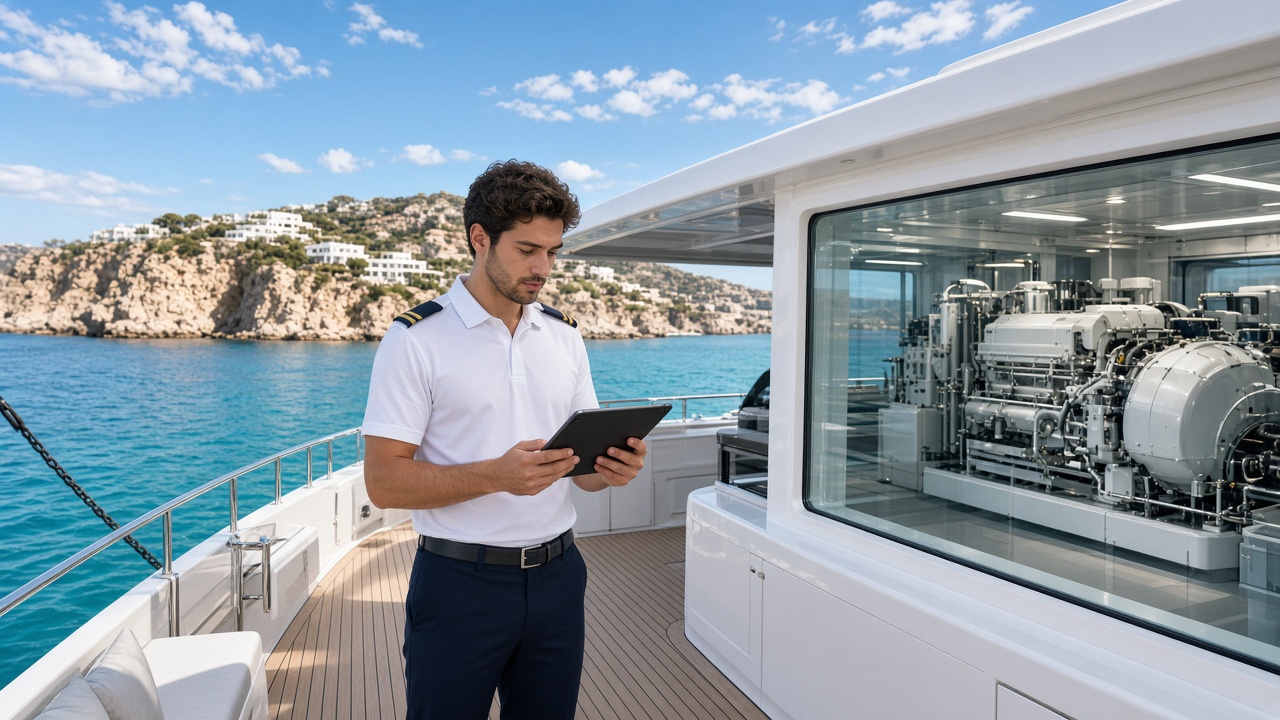
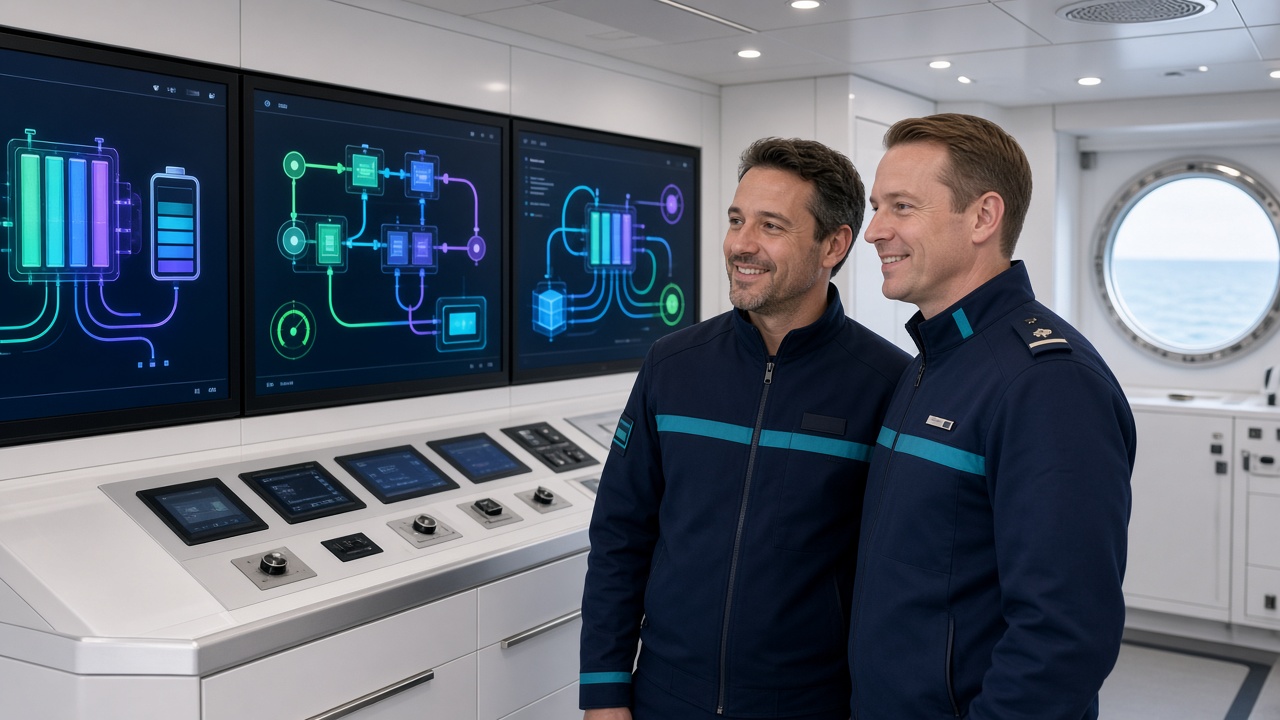
That's great news if you're an engineer or ETO who's willing to learn. Bigger diesel-electric yachts run electrical installations above 1,000 volts, and high-voltage training at operational level covers exactly that: safe isolation, earthing, switchgear and working under a permit to work. Add battery systems, energy management software and fuel cells, and the engineering department starts to look a lot more like an electrical and software team.
My honest take: the engineers who'll be most in demand in 2027 are the ones who can talk confidently about both. Diesel isn't going away (just ask Gianetti), but a CV that shows hybrid or high-voltage experience is going to stand out on the bigger, newer yachts. If you're choosing your next course, that's where I'd put the money.
It's not just engineers. Silent, zero-emission time at anchor changes the guest experience, and the interior and deck teams will be the ones selling it: explaining to guests why the yacht is so quiet tonight, planning charging around the day's programme, running water toys from a battery-powered tender. Crew who understand the technology, even at a basic level, will be more useful to their captain.
How to get onto a new build or a newly delivered yacht
New yachts are a special opportunity, because the crew list starts from (almost) nothing. Here's my practical advice.
1. Watch the delivery and launch news. Launches, sea trials and deliveries are public. A yacht that launched in July and delivered in November, like Silvia, has been building its crew for months. Yachts launched this autumn will be hiring through winter. Keep a list.
2. Talk to the management companies and crew agencies. New-build crew are usually recruited by the yacht's manager or a crew agency, often starting with the captain and chief engineer and working down. Get your CV in front of the agencies that place on large yachts, and keep it current.
3. Show you can handle "new". Commissioning a yacht is a very different job from running an established one. There are snag lists, warranty items, systems nobody on board has used before and a lot of setting up from scratch. If you've done a new build, a delivery trip or a major refit, put it at the top of your CV. If you haven't, show you're adaptable and good at systems and paperwork.
4. Go where the yachts are. The winter season is ramping up. The Antigua Charter Yacht Show runs 4 to 9 December 2026 at Nelson's Dockyard, its 65th year, and plenty of yachts will be crewing up in the Caribbean and Florida around it.
5. Upskill for the yachts of 2027, not 2017. For engineers and ETOs that means high-voltage, hybrid and battery systems. For deck crew, it's tender driving and water-toy tickets. For interior, it's the service and wellness skills that big yachts with spas and beach clubs want.
Why I'm optimistic
There's been plenty of talk this year about crew shortages and good people heading ashore. That's real. But I'd much rather work in an industry with too many great jobs than one with too few.
A yard delivering six superyachts in a year, five of them over 100 metres, with more giants booked into the 2030s, is not an industry in trouble. It's one that needs more skilled, ambitious people, and it's building more interesting, more technical, better-equipped workplaces to put them in.
If you're thinking about your next move, now's a great time to make it. Have a look at the latest superyacht crew jobs and get your CV ready for the new builds.
Sources
- Lürssen's Biggest Year Yet: Six Superyachts Handed Over, Superyachts.com, 9 Nov 2026
- 54m Admiral Silvia delivered to her owner, Superyacht Times, 6 Nov 2026
- 53m Admiral Panorama 53 Superyacht Silvia Delivered to Owner, YachtBuyer, 9 Nov 2026
- Gianetti Delivers 38m ONeiro I After Extended Build, Superyacht Guide, 6 Nov 2026
- Gulf Craft Delivers Redesigned 31m Nomad 101 at Qatar Boat Show, Superyacht Guide, 8 Nov 2026
- High Voltage Operational course guide, Yacht Workers Council
- Antigua Charter Yacht Show 2026, Antigua Charter Yacht Meeting