Superyacht Deckhand Jobs 2026: What the Role Does and Pays
Deckhand jobs in 2026: what the role involves, pay by yacht size, the tickets that get you hired, the Yacht Rating path and how to get hired this season.
Almost every great superyacht career I know of started in the same place: on deck, with a chamois in one hand and a fender line in the other. Captains, chief officers, bosuns, even a fair few yacht managers and brokers. They all did their time as a deckhand.
It's the classic entry-level yacht job, and right now it's one of the busiest. As I write this, there are 67 live roles on SuperyachtRoles.com matching "deckhand", from junior deckhand on a 40-metre yacht in Bodrum to deckhand/carpenter on a 100m+ private motor yacht in the Caribbean. The winter season is ramping up, new yachts are being delivered every week, and captains need good people.
This is the latest in our What Each Role Does series, following the Bosun guide and the broader deck ladder from deckhand to captain. Here's what a deckhand really does, what it pays in 2026, the tickets that get you hired, and how to stand out.
What a deckhand actually does
The short version: you look after the outside of the yacht, the tenders and toys, and the guests while they're out on the water. The longer version is more varied than most people expect.
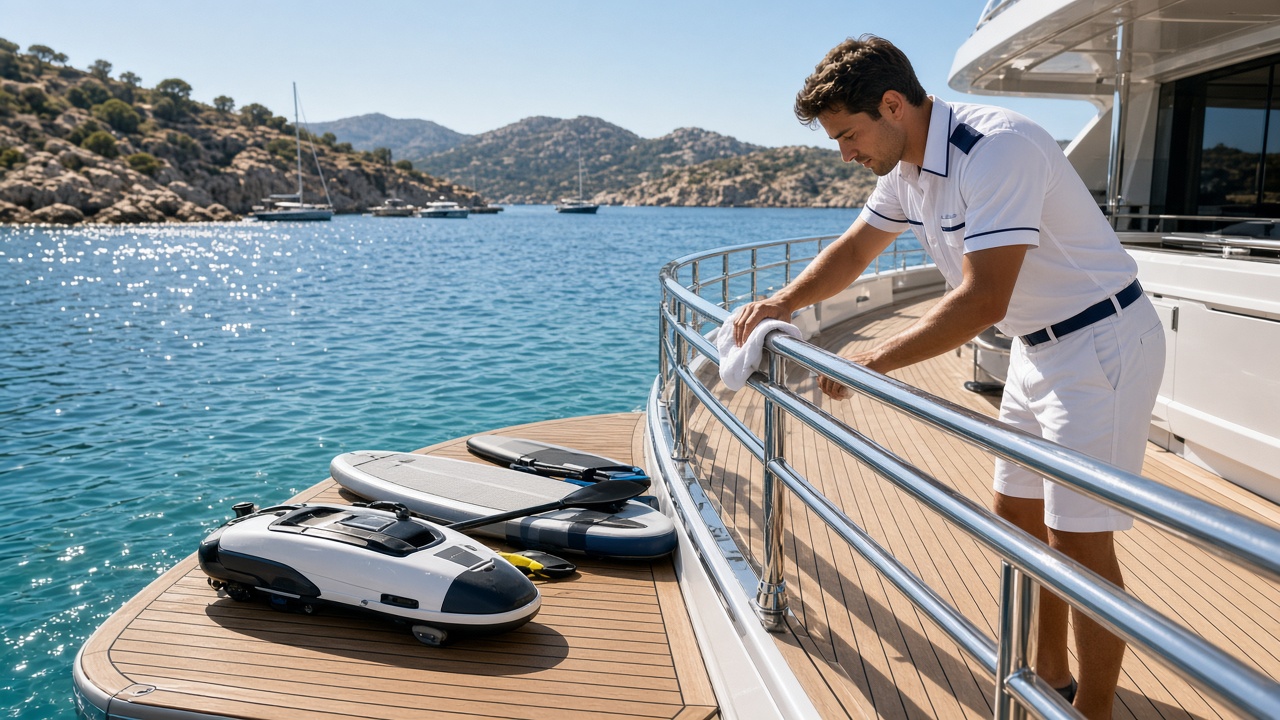
Exterior care. This is the bread and butter. Washing down, chamoising, polishing stainless, maintaining teak, touching up varnish and paint, and keeping every exterior surface looking like it was delivered yesterday. On a busy charter yacht you'll do a full wash-down more often than you'd believe. Done well, it's a craft.
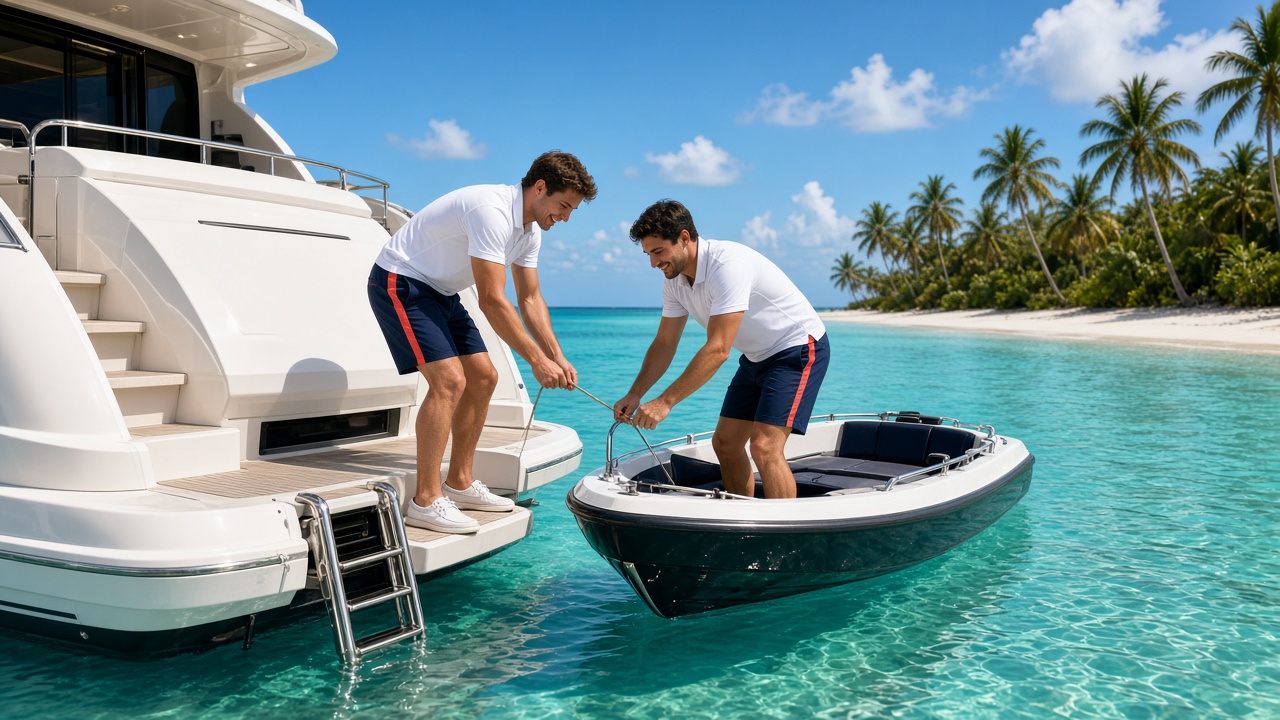
Lines, anchoring and mooring. You'll handle lines and fenders when the yacht comes in and out of port, help with anchoring, and learn how a yacht is secured safely. This is where you start learning real seamanship.
Tenders and water toys. Launching and recovering tenders, Jet Skis, Seabobs, paddleboards and inflatables. Fuelling, cleaning, and basic maintenance. Once you're qualified and trusted, you'll drive the tender, taking guests ashore or towing them on the toys. Guests often remember the deckhand who taught their kids to wakeboard more than anything else on the trip.
Watchkeeping. On passage and at anchor you'll stand watches, keeping a lookout, doing rounds and reporting to the officer of the watch. It's where you start building the habits (and the sea time) that lead to officer tickets.
Safety. Drills, checking safety equipment, and knowing your muster role. Every crew member has a job in an emergency, and deck crew are often at the sharp end.
Guest service. Especially on smaller yachts, deckhands help out at meal times, set up the beach club, and look after guests on deck. Being friendly, discreet and switched-on matters just as much as being able to tie a bowline.
On a 30-metre yacht you might be one of two deck crew, so you'll do everything, sometimes including a bit of interior or engine room work. That's why "deckhand/stew" and "deckhand/engineer" roles are so common in our listings. On a 100-metre yacht you'll be one of a large team under a bosun and lead deckhand, with more structure and more specialisation.
What deckhands earn in 2026
Two recent salary guides give a good, honest picture.
YPI CREW's 2026 deck salary guide puts monthly pay in euros like this:
- Junior deckhand: €3,000 on yachts under 30m, €3,000–€3,200 on 30–60m yachts, and €2,800–€3,000 on yachts over 60m
- Experienced deckhand: €3,200–€3,500 on yachts under 40m, rising to €3,750–€4,000 on yachts of 60m and above
- Specialised deckhand: €3,250 on 30–40m yachts and €3,800–€4,000 from 40m upwards
Northrop & Johnson's 2026 Yacht Crew Salary Guide works in US dollars and lists junior deckhands at $3,500 a month across all yacht sizes, with specialised deckhands at $3,500–$5,500, depending on size.
Notice the slightly counter-intuitive bit in YPI's numbers: junior pay is a touch lower on the biggest yachts. But the leave is much better. YPI lists 45 days' leave for juniors on smaller yachts, against 90 days or a 3:1 rotation on yachts over 60 metres. Big yachts also tend to bring bigger crew teams, more structure and better training. As a first job, don't just compare the monthly number. Compare the whole package.
And remember what's usually on top: food and accommodation on board, travel to and from the yacht, and on charter yachts, tips. You're spending very little while you're working, which is why so many young crew save more in a couple of seasons than their friends ashore do in years.
The specialist premium is real
The single best piece of pay advice for deckhands is this: bring a second skill.
YPI's guide says specialised deckhand roles include tender driver, kite surfer, carpenter, diver, videographer, photographer and more, and that photography, videography, carpentry, watersports instruction, diving, fitness and wellness qualifications remain highly sought after across yacht sizes. You can see it in our own listings right now: deckhand/carpenter, deckhand/PT, deckhand/engineer.
If you're a qualified dive instructor, a carpenter, a personal trainer or a talented photographer, put it right at the top of your CV. It's the difference between being one of hundreds of applicants and one of a handful.
The tickets that get you hired
The essentials before your first job:
- STCW Basic Safety Training. The four core modules are Personal Survival Techniques, Fire Prevention and Fire Fighting, Elementary First Aid, and Personal Safety and Social Responsibilities. No serious yacht will take you without it.
- ENG1 (or an accepted equivalent) seafarer medical certificate.
What makes you stand out: YPI says certifications such as Tender Operator, Yachtmaster Offshore, PDSD (Proficiency in Designated Security Duties), RYA PWC and PWC Instructor are now widely seen as markers of real technical readiness. If you're green and can afford one extra course, a powerboat or tender-driving ticket is a smart first add-on, because driving guests around is a big part of the job.
Your first big milestone: the Yacht Rating Certificate. YPI calls it one of the most commonly requested requirements for experienced deck roles. According to the MCA's official guidance, you'll need:
- At least six months of yacht service, including at least two months of actual seagoing service, on vessels of at least 15 metres load line length
- Your ENG1 and the four STCW basic safety certificates
- Two forms of sea service evidence, such as a discharge book and sea service testimonials
- A completed Yacht Rating Training Record Book (Annex B of MSN 1862), with tasks signed off by a UK CoC or UK FSE holder
Holders of an RYA Offshore or Ocean certificate of competence may get a reduction in the sea service required and may not need to complete the training record book.
My tip: start your training record book on day one of your first job, and ask your officers to sign tasks as you go. Crew who leave it until the end end up chasing signatures from people who've moved on.
From there, the path runs to lead deckhand, bosun and the officer tickets. If you want to see where it leads, our Bosun and Second Officer guides are the next chapters.
How to land your first deckhand job this season
Go where the yachts are. The Caribbean season is starting, and the Antigua Charter Yacht Show runs from 4 to 9 December 2026 at Nelson's Dockyard. Our Caribbean season hiring guide covers where the work is this winter.
Take daywork seriously. A day of washing down a yacht is a job interview. Turn up early, work hard, be cheerful and don't touch your phone. Lots of permanent jobs start as daywork.
Get your CV right. One page, a clear, friendly, professional photo, your tickets with expiry dates, and anything practical you've done: sailing, boat handling, construction, hospitality, sport coaching. Captains are hiring attitude and work ethic as much as experience.
Keep your records tidy. Testimonials, discharge book, certificates and expiry dates. New tools are making this easier. We wrote about the verified sea time and AI crew tools launched at FLIBS last week, but keep your official paperwork too.
Use the job boards and agencies. Agencies like Bluewater, Burgess, Quay Crew, Wilson Halligan and TWW Yachts all have deckhand roles live on our site right now. Set up a profile, keep it current and apply quickly. Good deckhand roles move fast.
Why I'd still start on deck in 2026
Yes, it's hard physical work, the hours are long in season and you'll miss some birthdays at home. I won't pretend otherwise. But think about what you get: a good salary with almost no living costs, travel to some of the most beautiful places on earth, real responsibility early, and a clear, ticket-by-ticket path all the way to captain.
The industry is building bigger, more technical yachts every year, and it needs good people to run them. If you're ready to work hard and learn fast, there's never been a better time to step on board.
Browse the latest deckhand jobs and get your application in.
Sources
- Superyacht Deck & Bosun Salary Guide 2026, YPI CREW
- 2026 Yacht Crew Salary Guide (USD), Northrop & Johnson
- Guidance on how to apply for a yacht rating certificate, Maritime and Coastguard Agency (GOV.UK)
- Antigua Charter Yacht Show 2026, Antigua Charter Yacht Meeting
- Live deckhand listings on SuperyachtRoles.com, checked 10 Nov 2026