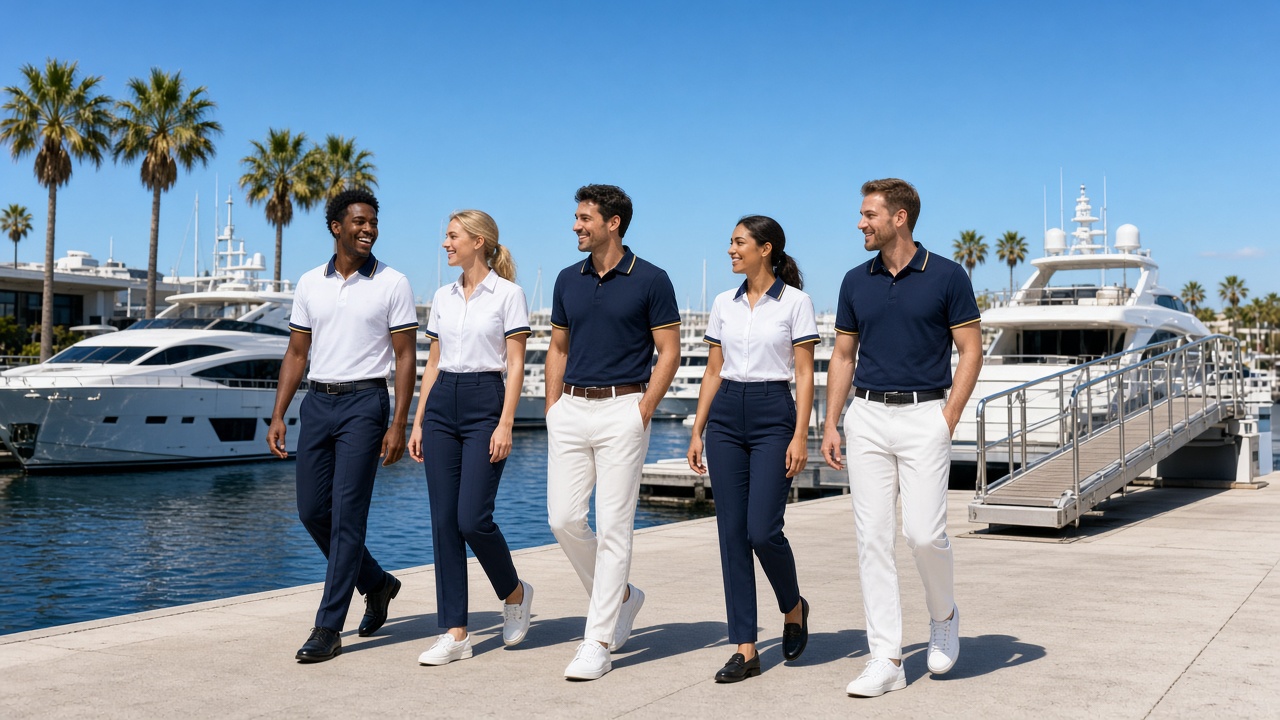
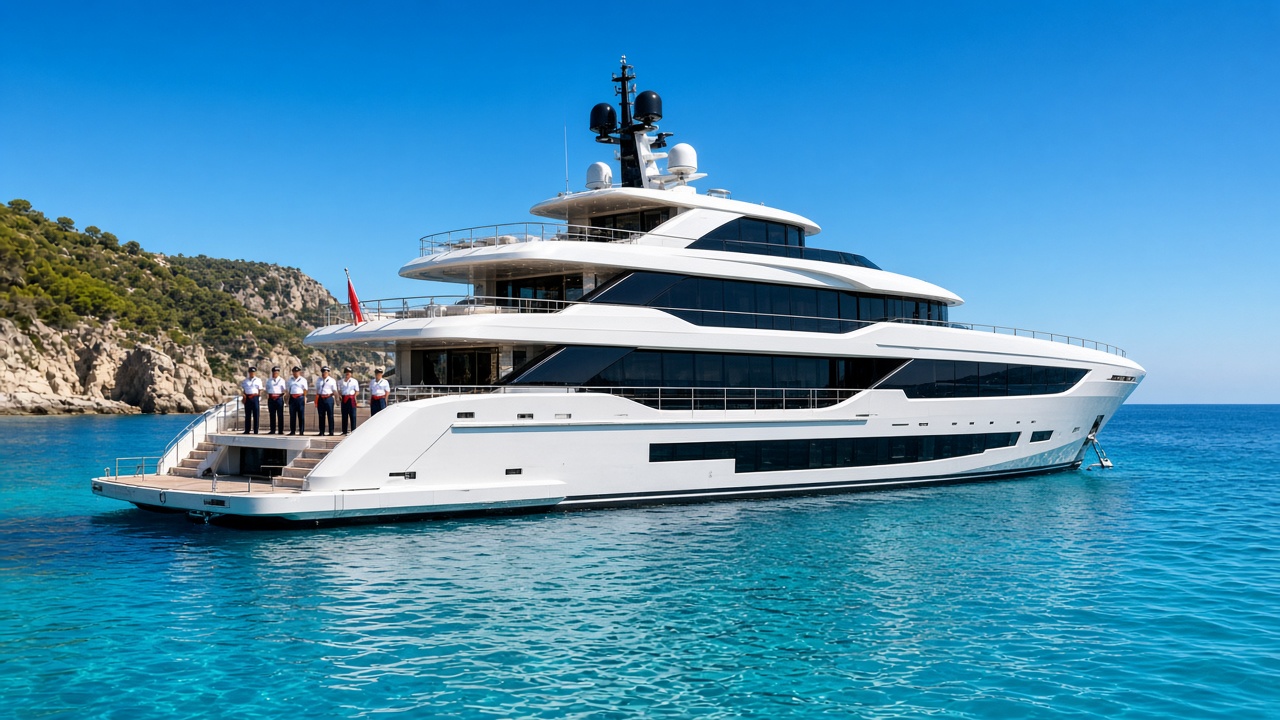
Superyacht Deck Jobs 2026: From Deckhand to Captain
What each superyacht deck role does in 2026, what it pays, which STCW and MCA tickets you need, and how the new Yacht Unlimited CoC raises the ceiling.
Yesterday I put some 2026 pay numbers on the table for every department on a superyacht and promised we'd go deep on one role at a time. So here's the first instalment of the what each role does series, and I'm starting where most yachting careers start: on deck, with a chamois in your hand at 6am.
The deck department is the most visible team on board and, in my view, the one with the clearest ladder in the whole industry. You can walk on as a green junior deckhand and, with the right tickets, sea time and attitude, walk off years later as a captain. And 2026 has quietly made the top of that ladder a lot more reachable. More on that below.
What the deck team actually does
Strip away the Instagram version and the deck team has three jobs: keep the yacht immaculate, keep it safe, and give guests the time of their lives on and around the water.
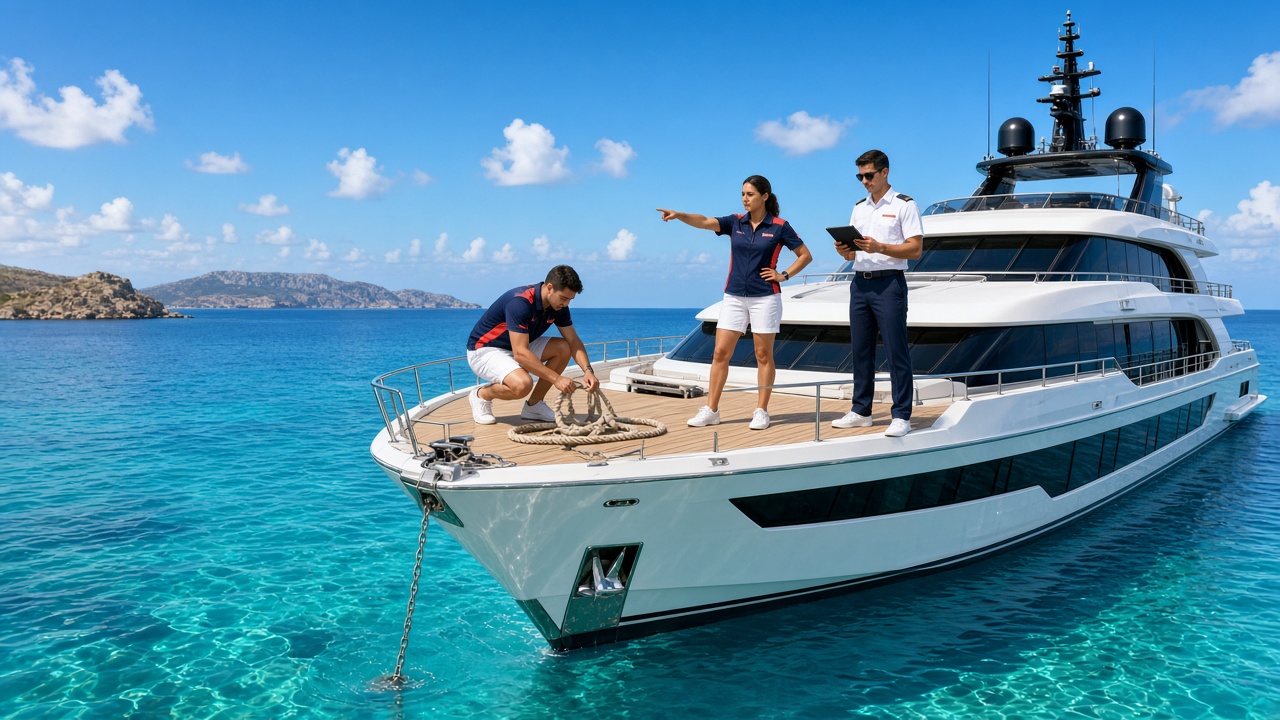
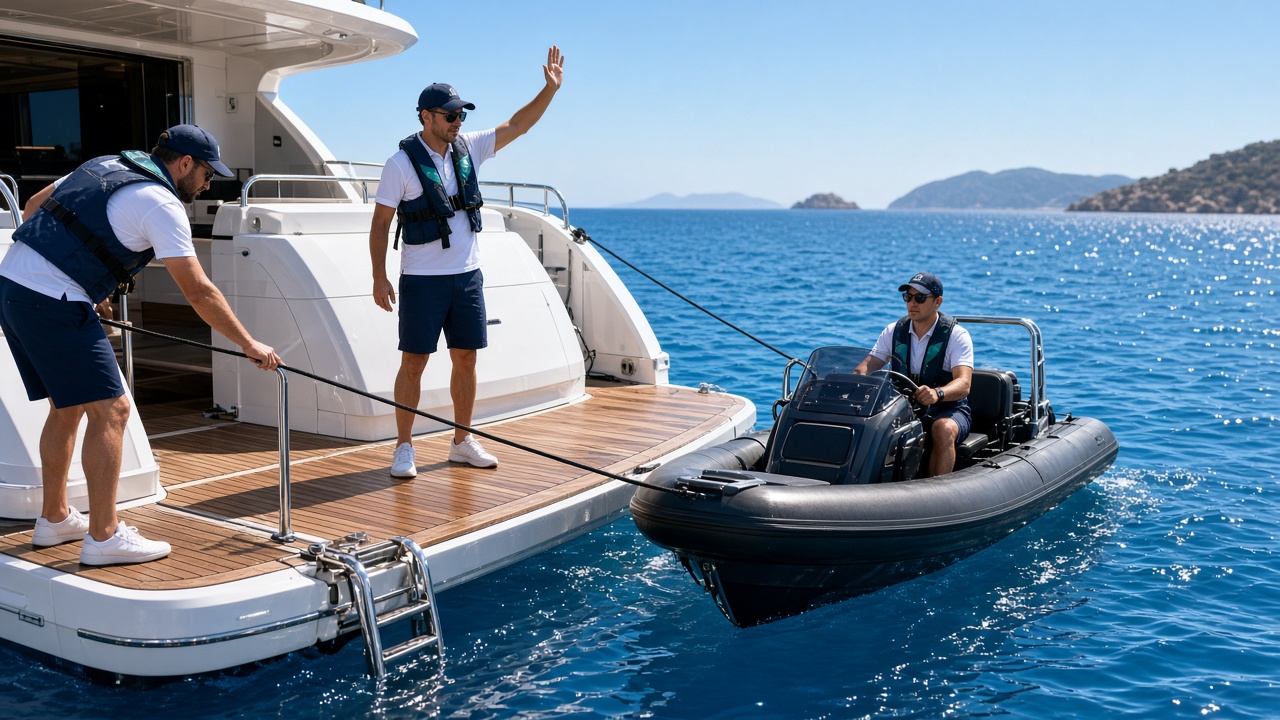
Day to day that means washdowns, teak care, stainless polishing, varnish and paint touch-ups, line handling, anchoring and mooring, tender and toy operations, watersports with guests, and safety equipment checks. On the bridge, the officers handle navigation, watchkeeping, passage planning and the safety management system.
Luxury Yacht Group's guide to a career in the deck department (8 May 2026) sums up the shape of it nicely: early on you're judged on how well you do practical tasks; later you're judged on your judgment, your leadership and your ability to keep people and yacht safe. I think that's exactly right, and it's the single most useful idea for anyone planning a deck career.
The ladder, rung by rung
Titles vary from boat to boat, but a common progression is junior deckhand, deckhand, lead deckhand or bosun, then (on some yachts) first mate, officer of the watch, chief mate and captain. Here's what each rung really involves, with pay benchmarks from Northrop & Johnson's 2026 Yacht Crew Salary Guide (monthly, USD) where they list them.
Junior deckhand
Your first season. Washdowns, polishing, teak, fenders and lines, helping with docking, learning where every piece of safety kit lives. It's repetitive, and it's where you learn the standard. N&J lists junior deckhands at $3,500 a month across all yacht sizes.
What captains want from you isn't knowledge. It's curiosity, reliability and the ability to finish a job properly when nobody's watching.
Deckhand and specialist deckhand
With a season or two behind you, you start working without being asked: tender driving, watersports, anchoring, maintenance on deck gear, helping train the next new starter. This is also where you can jump the pay queue. N&J lists a specialised deckhand category at $3,500–$5,500, covering roles like tender driver, kite surfer, carpenter, diver, videographer and photographer.
I keep coming back to that line because it's the most practical career advice in the whole salary guide: bring a skill the yacht would otherwise have to fly someone in for.
Lead deckhand or bosun
Your first leadership job, and for a lot of people the biggest jump of their career. You're now responsible for other people's work: planning maintenance, running deck inventory, coordinating tender ops, training juniors and keeping the team safe. N&J puts bosuns at $3,500–$4,500 on 30–40m, rising to $5,000–$6,000 on 100m+.
That range tells you something important. A bosun on a 35m yacht and a bosun on an 80m yacht share a title, not a job. Recruiters know it, so when you move up in yacht size, your CV moves up in value too.
First mate, OOW and chief mate
This is where your career moves from the deck to the bridge. Officers stand watches, plan passages, supervise deck operations and carry real regulatory responsibility. On smaller yachts, "first mate" is often an operational title rather than a specific certificate; on bigger yachts, the roles map to formal certificates of competency.
N&J lists chief officer / first mate at $4,500–$7,000 on 30–40m and $9,000–$12,000 on 80–100m.
Captain
Ultimate responsibility for yacht, crew, guests, budget, compliance and culture. N&J lists captains at $9,800–$16,375 on 30–40m and $26,200–$32,800 on 80–100m, with 100m+ marked as discretionary. By this point you're paid for judgment, not for polishing.
The tickets: what you need, and when
Here's the bit that confuses most newcomers, so let me lay it out using the UK Maritime and Coastguard Agency's rules, which a huge share of the industry works to. (Always check what your yacht's flag state requires.)
To get on board at all. Under the MCA's MSN 1858 (Amendment 2), before your first trip you need a valid ENG1 medical (or accepted equivalent) and the STCW basic training modules: Personal Survival Techniques, Fire Prevention and Fire Fighting, Elementary First Aid, and Personal Safety and Social Responsibilities, plus Security Awareness. Plenty of recruiters also like to see an RYA Powerboat Level 2 on a green deckhand's CV.
New for 2026. From 1 January 2026, the IMO added a new competence to the Personal Safety and Social Responsibilities module: preventing and responding to violence and harassment, including sexual harassment, bullying and sexual assault. If you're doing your basic training now, it's included. The German flag administration notes that certificates issued before that date remain valid, but some flag states are asking for top-up familiarisation, so check yours. Personally, I think this is a genuinely good change. Better culture on board is better retention, and better retention means better careers.
To become an Officer of the Watch (yachts under 3,000 GT). MSN 1858 sets out the requirements. In summary, you need to:
- be at least 19
- hold a Yachtmaster Offshore with the shore-based course (or one of the accepted alternatives, including Yachtmaster Coastal plus an RYA Coastal Skipper practical course)
- have at least 36 months of onboard yacht service since age 16, including at least 365 days of seagoing service on vessels 15m or over, with a minimum of 250 days actually at sea
- hold an Efficient Deck Hand (EDH) certificate
- pass the MCA Navigation and Radar and General Ship Knowledge modules, complete a Yacht Training Record Book, and pass the OOW oral exam
From there, the route continues to Chief Mate and Master (yachts under 500 GT and under 3,000 GT), each with more sea time and further training.
The 2026 game-changer: Yacht Unlimited
This is the news I'm most excited about for deck crew. On 18 May 2026 the MCA launched the Yacht Unlimited Certificate of Competency. It lets deck officers become Chief Mate or Master on yachts of any size, including above 3,000 GT, without first having to go off and earn time on cargo ships.
Until now, a yacht captain who wanted to command the very biggest yachts had to obtain a merchant Officer of the Watch Unlimited certificate, then work back up through Chief Mate and Master Unlimited. As the MCA itself put it, that process "frequently took many years to complete and proved unfeasible for many experienced professionals." The new route accepts yacht sea service and runs through the updated UK syllabus, while staying aligned with STCW unlimited standards. It's limited to yachts, so it doesn't make you an unlimited master on a tanker.
Why does this matter so much? Because the top end of the market is where the growth is. BOAT International's 2026 Global Order Book counted 1,093 superyachts over 24m on order or in build, with an average length of 40.8m and still climbing. Bigger yachts need bigger, more senior bridge teams, and now there's a career path to the very top that doesn't require leaving yachting.
The MCA also said a matching engineer pathway was in development and due this year. As far as I can find, it hasn't been published yet, so engineers, watch this space.
My take: how I'd build a deck career in 2026
I'm genuinely optimistic about the deck department right now. The ladder is clear, the tickets are well defined, and the ceiling just got raised. Here's what I'd do.
- Do your entry tickets properly. STCW basic training and an ENG1 first, then a powerboat ticket. Don't turn up to the dock with half of it pending.
- Pick a specialism in your first two years. Tender driving, diving, watersports instruction, carpentry, drones and photography. It's the fastest way off the junior rate.
- Log every day of sea time. Your path to OOW is built on documented service. Treat your discharge book and testimonials like money.
- Move up in size when you can. A season on a 60m+ yacht with a full deck structure will teach you more about leadership than three on a small boat.
- Start thinking like an officer before you're one. Watch how the bridge plans passages, how the mate runs the team, how the captain handles owners. Promotions follow trust.
- If you're already a Master (Yachts), read Section 4 of MSN 1858. The Yacht Unlimited route could be the career move of your decade.
Next in the series, we'll head below deck to the interior. In the meantime, browse the latest superyacht jobs and find the next rung on your ladder.
Sources: Northrop & Johnson 2026 Yacht Crew Salary Guide; Luxury Yacht Group, "A Career in the Deck Department", 8 May 2026; MCA MSN 1858 (Amendment 2) and MCA announcement, 18 May 2026; IMO, 9 January 2026; Deutsche Flagge STCW guidance; BOAT International 2026 Global Order Book.