Superyacht Engineering Jobs 2026: From Junior to Chief Engineer
Superyacht engineering careers in 2026: what each role does, the new MCA Small Vessel ticket path, real salary data and how hybrid tech is changing the job.
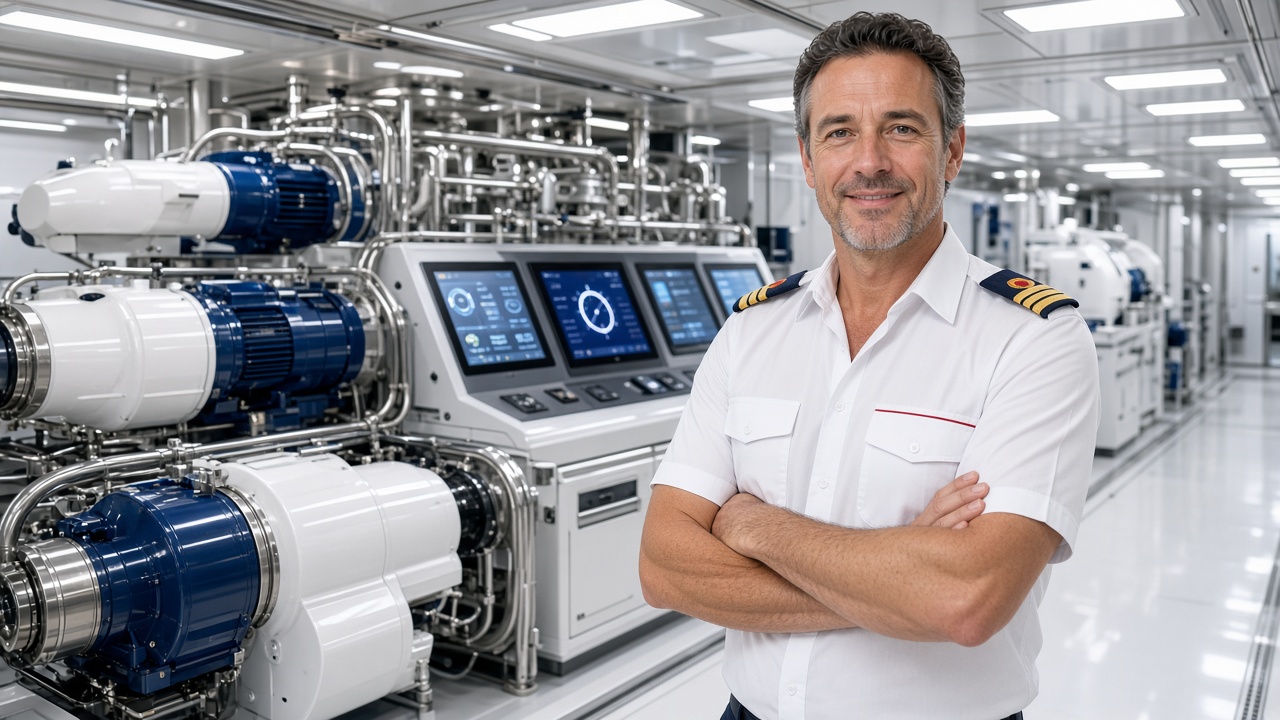
Every superyacht has a beating heart, and it isn't the sundeck. It's the engine room. Guests remember the toys, the food and the view, but none of it happens without a team of engineers keeping the power on, the water clean, the air cool and the boat moving. If you like solving real problems with your hands and your head, I genuinely think the engineering department is the most future-proof place to build a career in yachting right now.
This is the next instalment in our careers series, after deck and interior. I'll walk through what each engineering role actually does, the certificate path as it stands in 2026 (it has changed, and a lot of online advice is out of date), what the pay looks like according to real agency data, and how hybrid tech is reshaping the job.
Who's who in the engine room
On a 30–40m yacht you'll usually find a sole engineer, often called the chief, doing everything: main engines, generators, watermakers, air conditioning, plumbing, tenders, the lot. It's a brilliant training ground because nothing is somebody else's problem.
As yachts get bigger, the department splits. The Chief Engineer becomes a manager as much as a mechanic: planned maintenance, budgets, spares, class and flag surveys, contractors, and a seat at the table with the captain when the owner wants to change the programme. The Second Engineer runs the day-to-day machinery and is the chief's right hand. On larger yachts a Third Engineer and a Motorman handle routine maintenance, rounds and watchkeeping support. On 100m+ yachts you'll see a 1st Engineer slotted between chief and second.
Then there's the role I'd be steering a young tech-minded person towards: the ETO (Electro-Technical Officer), often combined with AV/IT. On a modern yacht the ETO looks after power distribution, automation and alarm systems, networks, satellite comms, guest entertainment and increasingly cyber security. When a guest's movie won't play or the stabilisers throw a fault, it's the ETO's phone that rings.
A typical day for a junior engineer starts with engine room rounds: checking levels, pressures and temperatures, logging readings, then working through the planned maintenance list. Filters, impellers, watermaker membranes, tender servicing, a blocked guest toilet at the worst possible moment. It's not glamorous, but every job builds the knowledge you'll need for your oral exams later, and the best chiefs I've met all remember being that person with their arm in a bilge.

The certificate path in 2026: Y tickets are closed
Here's the big one. If you've read older guides telling you to work towards your Y4, Y3, Y2 and Y1, that route has shut. The UK Maritime and Coastguard Agency says plainly that "the yacht structure has closed – no further NOEs will be issued (except resits)." Existing Y tickets are still revalidated and can be converted, but new engineers now progress through the Small Vessel (SV) route under MSN 1904.
In practice the ladder looks like this, based on the MCA's MIN 642 guidance:
- Get the basics: STCW basic safety training (Personal Survival Techniques, Fire Prevention and Fire Fighting, Elementary First Aid, Personal Safety and Social Responsibility) and a valid ENG1 medical. No ENG1, no job.
- AEC 1 and AEC 2. The Approved Engine Course is your entry ticket. Under the MCA's AEC 1 guidelines each part runs at least 35 contact hours, you need to be 18, and no prior qualification is required. AEC 2 is roughly half practical, half theory. Most providers run each as a five-day course.
- Build sea time. The experienced route to SV Engineer Officer of the Watch involves 24 months of onboard yacht service on vessels of at least 200kW (including at least six months actually underway), then a further year on bigger machinery while completing a Training Record Book and workshop skills training.
- Modules and orals. Written modules such as SV Marine Diesel Engineering, Auxiliary Equipment Part I and Operational Procedures, Basic Hotel Services and Ship Construction, plus advanced safety courses (survival craft, advanced fire fighting, medical first aid, HELM), and then the MCA oral exam for SV Second Engineer / EOOW (under 9,000kW, under 3,000GT).
- Chief Engineer SV. More sea time as an EOOW, more modules (Chief Engineer Statutory and Operational Requirements, Applied Marine Engineering, General Engineering Science I and II) and another oral take you to Chief Engineer SV under 3,000kW / 500GT, then under 9,000kW / 3,000GT.
Got a trade background? Good news. The MCA allows exemptions from some modules for relevant UK degrees, HNDs and HNCs, and there's an accelerated route for graduates and those with engineering apprenticeships. Electricians and diesel mechanics coming from shore can often move faster than they expect.
For ETOs, the MCA route sits under MSN 1860 via a cadetship or an experienced-seafarer action plan from an approved nautical college. Worth knowing: the MCA notes that "Senior ETO" isn't recognised by STCW, so it's a job title, not a certificate.
My honest advice: get an action plan from an MCA-approved Small Vessel training provider early, before you spend money on courses in the wrong order. And log every day of sea time properly from day one. Sea service on yachts is verified by the PYA or Nautilus International, and sloppy testimonials cost people months.
What engineers actually earn
I only want to quote real numbers, so these come from two agencies' published 2026 guides: YPI CREW's engineer salary guide and Cara Lees Yacht Crew's 2026 salary guide. All figures are monthly, gross, in euros, and are starting ranges that move with the candidate and the programme.
- Chief Engineer: €5,000–7,000 (30–40m), €6,500–8,000 (40–50m), €8,000–12,000 (50–60m), €11,000–12,000+ (60–80m), €12,000–15,000 (80–100m), €13,000–15,000+ (100m+)
- 1st Engineer (100m+): €8,500–10,000
- Second Engineer: €4,500–5,000 (40–50m), €5,500–7,000 (50–60m), €7,000–8,000 (60–80m), €7,500–9,000 (80–100m), €6,500–7,500 (100m+)
- Third Engineer: €4,000–5,500 (60–80m), €5,000–6,000 (80m+)
- Motorman: €3,500–5,000 (80m+)
- ETO and AV/IT: €7,000–8,500 (60–80m), €8,500–10,000+ (80–100m), €9,000–10,000+ (100m+)
Look at that ETO line again. On big yachts a good ETO can out-earn a second engineer, which tells you exactly where the industry's pain is. YPI also notes that 2:2 rotation is "now the industry standard" for chiefs and seconds, and that senior engineers with proven longevity are in high demand. Translation: if you stay put, do good work and get your tickets, you have real leverage. For the full picture across every department, see our 2026 crew salaries guide.
Hybrid tech is rewriting the job description
This is the bit that excites me. Yachts are becoming floating power stations with batteries, and the engineers who understand that are going to be in very short supply.
Take Benetti's 67m Dagger, which YachtBuyer covered in October. She pairs two Caterpillar C32 main engines and three generators with two 200kW electric motors and a 360kWh sodium-metal chloride battery bank. She can cruise at 7 knots on electric power, 12 knots on the mains, or 10 knots on a single engine with battery support, and run for up to two hours silently at anchor without generators. That's not a diesel mechanic's job any more. It's power management, battery safety, control systems and data.
YPI says the same from the hiring side: engineers with hybrid propulsion and alternative fuel experience are "not only more attractive to hire", many are actively seeking out yachts with the latest propulsion tech. Even the entry-level AEC 1 syllabus now covers lithium-ion batteries and awareness of hybrid vessels and alternative fuels.
So my tip: take high-voltage training seriously, learn the automation and monitoring systems on whatever yacht you're on, and get comfortable with digital maintenance software and diagnostics. I fully expect AI-assisted predictive maintenance to become normal in yacht engine rooms over the next few years. It won't replace a good engineer; it will make a good engineer worth more.
How to get your first engineering job
- Do your STCW, ENG1 and AEC 1 and 2 together so you're instantly employable as a junior engineer, deck/engineer or motorman.
- Lead with any trade skills. Electrician, plumber, HVAC, diesel or automotive mechanic, refrigeration: put it at the top of your CV. Yachts love people who can fix things.
- Consider a deck/engineer role on a smaller yacht. You'll get hands-on time on every system and start building sea time.
- Use yard periods. Refits are when engineers learn fastest and when relief and temporary engineering roles open up. YPI notes demand for temporary and relief engineering contracts "remains consistent".
- Stay a full season. Longevity is the single thing every agency says chiefs and captains look for.
The engineering department rewards curiosity, patience and people who keep learning. With the fleet getting bigger and more electric every year, I'm very optimistic about where it's heading. When you're ready, browse live superyacht engineering jobs and start building your path to chief.
Sources
- MCA: Engineering Officers and Ratings (updated 9 Oct 2026)
- MCA: MIN 642 Engineer Officer Small Vessel CoC guidance
- MCA: Approved Engine Course 1 guidelines
- YPI CREW: Superyacht Engineer Salary Guide 2026
- Cara Lees Yacht Crew: Yacht Crew Salary Guide 2026
- YachtBuyer: Benetti reveals hybrid technology aboard 67m Dagger