Superyacht ETO Jobs 2026: What the Role Does and Pays
What a superyacht ETO and AV/IT officer actually does in 2026, tickets that get you hired, pay by yacht size from YPI CREW and Lighthouse, and live seats.
If you like fault-finding more than polishing teak, and you are happiest with a single-line diagram and a thermal camera in your hand, the Electro-Technical Officer role is where modern yachting puts the real technical work. On anything from about 60 metres up, the ETO (and often the combined ETO/AV-IT post) keeps power, automation, bridge electronics, networks and guest entertainment running while everyone else notices only when something blinks. This guide covers what the job actually looks like day to day, the tickets that get you hired, what the 2026 salary guides say by yacht size, how rotation and the market are shifting, and where live seats are showing up right now.
What an ETO actually does aboard
The short version: everything that runs on current or data. The longer version is why the role has become one of the hardest technical seats to fill well.
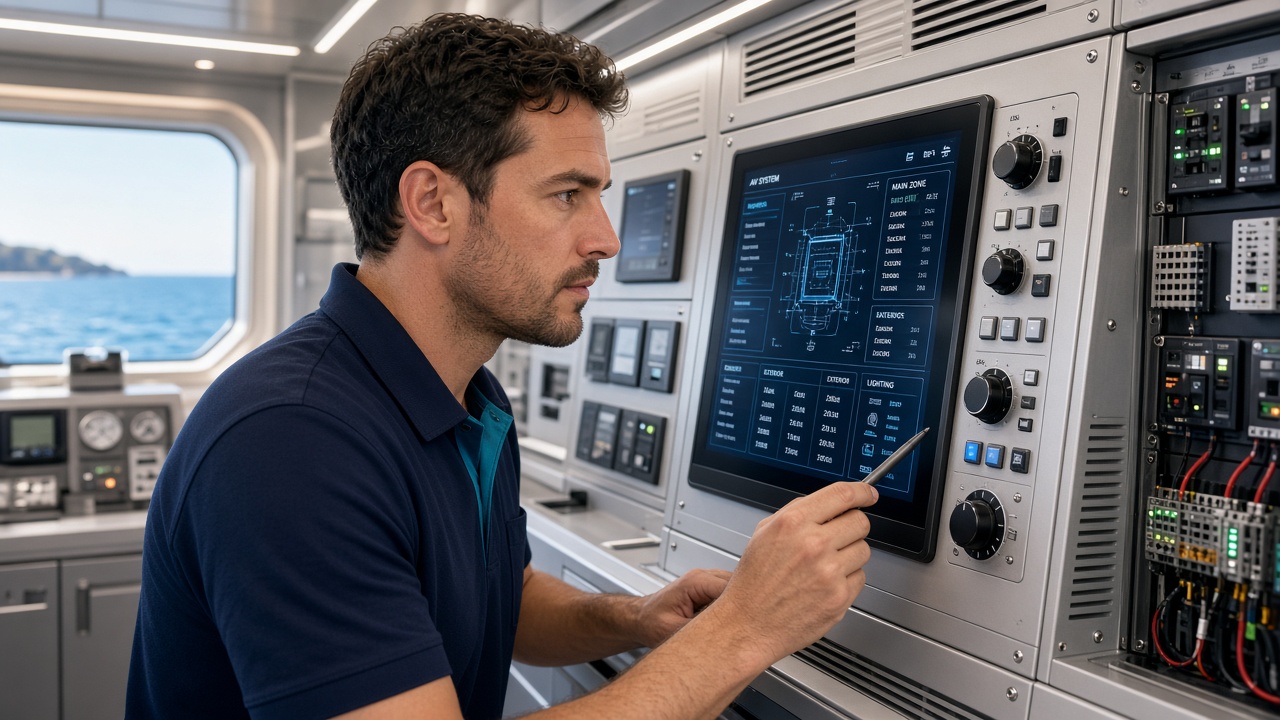
Your core responsibility is the yacht's electrical plant. That means generators and switchboards, shore-power converters, UPS units, battery banks and the power-management system. You own the integrated alarm and monitoring system, fire detection, CCTV and access control. On the bridge you support the officers with radar, ECDIS, autopilot, GMDSS and the VSAT dome. In the quiet weeks you live in planned maintenance, insulation testing, thermal imaging and keeping the electrical drawings honest.
When guests are aboard, priorities flip. Guest Wi-Fi, satellite TV, lighting scenes and the cinema system suddenly matter as much as a generator alarm, because a dropped connection in the owner's suite gets treated with the same urgency. On yachts between roughly 60 and 80 metres you are often the only ETO and the AV/IT person. On 100m+ boats there is usually a separate AV/IT officer, which lets you concentrate on power, automation and bridge systems while someone else babysits Crestron scenes and the guest network.
Our own ETO role guide (updated 28 October 2026) puts it plainly: you report to the Chief Engineer, with a working line to the Captain for bridge and communications. Typical yacht size is 60m to 150m+. Team size is usually one on 60–80m, rising to two or three with AV/IT support on 100m+.
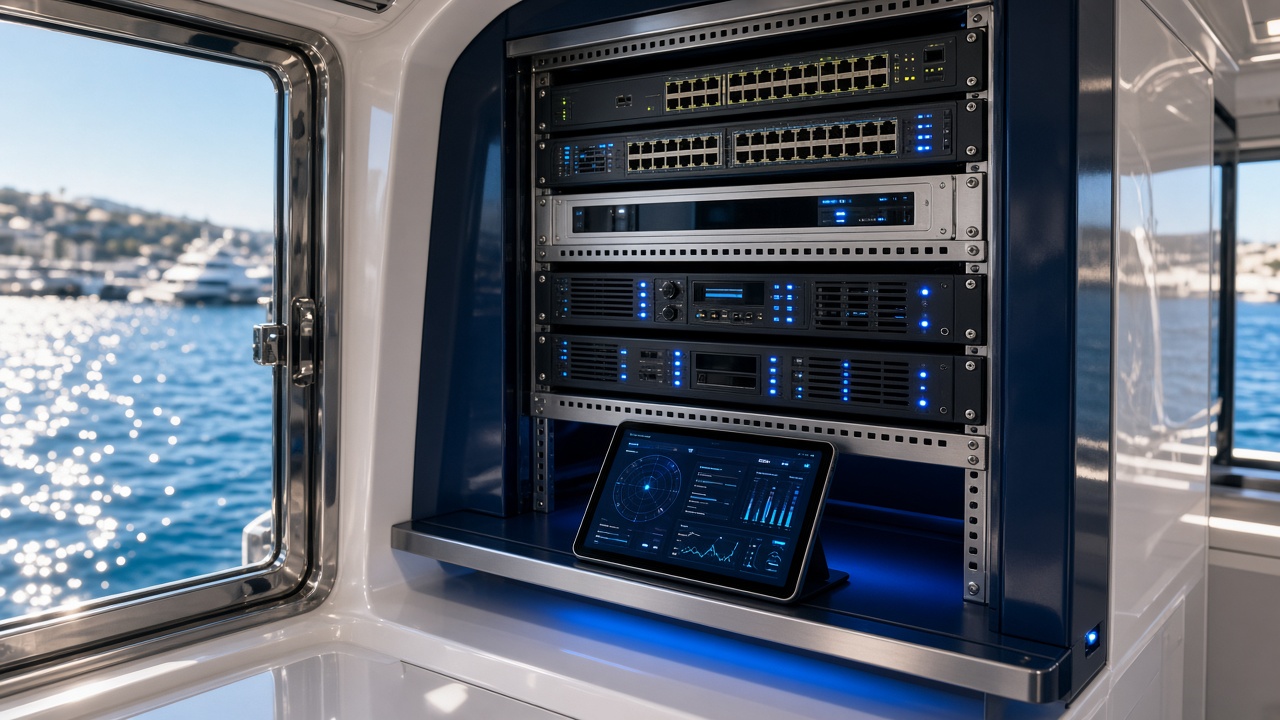
A charter-day sketch from that same guide is worth sitting with. Morning walk of the engine room and switchboard with the duty engineer. Brief with the Chief and Captain. Trace an intermittent deck-lighting fault before guests are up. Rescue guest Wi-Fi when the VSAT drops near cliffs by flipping traffic to the 4G router. Set up the beach-club cinema. Update PMS and order spare breakers. Then, just when you thought you were off, a cabin control panel freezes at dinner and you reset it via the Crestron processor before dessert. That is the job: planned work interrupted by the things guests notice.
Tickets and the path in
Most ETOs arrive from shoreside electrical work, the merchant navy or the military. A recognised electrical or electronics trade qualification plus real hands-on experience still counts for more than yacht time at the start. Captains and Chief Engineers want someone who can read a single-line diagram, work safely on a 690V board, and explain the fix in plain English afterwards.
Must-haves (from the SuperyachtRoles ETO guide):
- STCW Basic Safety Training
- ENG1 medical
- PDSD
- Recognised electrical or electronics trade qualification
What gets you hired ahead of the pack:
- MCA ETO Certificate of Competency (STCW III/6)
- High-voltage safety training
- GMDSS GOC
- Cisco CCNA or similar networking
- Manufacturer courses such as Crestron or Kongsberg
Experience with Crestron, Kaleidescape, Cisco networking or automation platforms such as Praxis or Kongsberg will set a CV apart. The MCA ETO CoC is not compulsory on every smaller yacht, but it is becoming the expected standard for senior roles on large commercial-coded boats, and it strengthens your hand in pay talks.
Progression usually runs toward larger yachts, rotational contracts and senior ETO roles on 120m+ builds, where the systems feel closer to a small cruise ship. Some ETOs move across to the engineering ladder through Y-tickets. Others go ashore into build supervision, refit project work or technical management — places that value an ETO's grasp of yacht systems highly.
What ETO and AV/IT roles pay in 2026
Pay scales with yacht length, scope across AV/IT, rotation and experience. Three independent 2026 sources line up closely.
The YPI CREW Superyacht Engineer Salary Guide 2026 lists ETO & AV/IT Officer monthly salaries as:
- 60–80m: €7,000–€8,500
- 80–100m: €8,500–€10,000+
- 100m+: €9,000–€10,000+
Equal rotation is the typical pattern in that guide.
Lighthouse Careers' ETO salary 2026 guide (updated 24 September 2026) uses the same length bands at €7,000 to €10,000+, and reports a median of €7,800 a month from six of their own placements.
Our ETO role page quotes guide pay of roughly US$5,500–13,000 a month across the size range, checked against Northrop & Johnson's 2026 Yacht Crew Salary Guide figures for ETO and AV/IT (about 7–8.5k on 60–80m, 8.5–10k+ on 80–100m, 9–10k+ on 100m+, in US dollars). Charter tips are shared with the whole crew and can add several thousand dollars across a busy season. Rotational posts on 100m+ often pay a touch less per month in exchange for equal time off.
Rotation and the market right now
YPI CREW's 2026 engineering guide is clear that recruitment at the senior end is candidate-driven. Longevity is prized, but packages on offer from some yachts have not always kept pace with what experienced engineers expect when they move. Two-on, two-off rotation is now described as the industry standard for engineers; yachts that cannot offer structured time-for-time leave find it harder to attract strong technical people.
Hybrid propulsion and sustainability skills are also moving from "nice" to "valued". Engineers who understand hybrid systems, alternative fuels and cleaner operational practice are increasingly sought after — and many of them are actively choosing yachts that run modern propulsion technology. If you are building your CV in 2026, HV experience plus exposure to hybrid or battery systems is a smart bet.
Who is hiring now
Live seats change week to week, so treat any single advert as a snapshot, not a promise. Two concrete examples from early November 2026:
- On SuperyachtRoles itself, a Burgess ETO/AVIT listing was showing around €6,000 a month on a 70m — a useful mid-size reference point for combined ETO/AV-IT work.
- On Yotspot (posted around 3 November 2026), an ETO/AV-IT role on an 85m private motor yacht was advertising €8,000 a month, rotational 1:1, start around 1 December 2026. Requirements included Crestron, Cisco, Windows Server, networks, CCTV and guest AV, with 5+ years on 70m+.
Those two ads sit comfortably inside the published salary bands: mid-70m combined work toward the lower end of the guide ranges, and an 85m rotational private seat around the middle of the 80–100m band.
For current openings across engineering and AV/IT, browse superyachtroles.com/jobs and set alerts so you see new posts as they land.
Practical advice if you want the seat
Build the stack that captains actually shortlist. Trade qualification first, then STCW/ENG1/PDSD, then HV, then the manufacturer courses that match the kit you will meet — Crestron, Cisco, Kongsberg or similar. The CoC opens bigger doors; do not leave it forever "for later".
Show fault-finding, not just certificates. CVs that list systems you have diagnosed under pressure beat CVs that only list courses. Captains hire people who stay calm when a board trips with guests aboard.
Be honest about combined vs split roles. On 60–80m you will almost certainly own power and guest tech. If you love AV/IT but hate switchboards (or the reverse), target 100m+ programmes where the work is split.
Price yourself against the guides, not against hope. Use the YPI CREW, Lighthouse and N&J bands as your floor and ceiling, then adjust for rotation, location and how much AV/IT scope the job really carries.
Stay visible. Agencies, a current profile, and a habit of checking live jobs weekly matter more in a candidate-driven market than waiting for the perfect boat to find you.
Ready when you are
ETO and AV/IT work is one of the most future-proof technical paths in the fleet. The boats keep getting more complex, guest expectations keep rising, and hybrid systems are only going to need more people who can keep them honest. If that sounds like your kind of problem-solving, get the tickets in order, aim your CV at the size and rotation you actually want, and start applying.
Browse open ETO, AV/IT and engineering seats on SuperyachtRoles jobs — and if you are still mapping the department, the ETO role guide is a solid next read.