Superyacht Chief Officer Jobs 2026: What the Role Does and Pays
What a superyacht chief officer does in 2026, what the role pays by yacht size, the MCA tickets you need, and how Yacht Unlimited lifts the career ceiling.
If you've been following our what each role does series, you'll know we've already walked the whole deck ladder, then gone deep on the bosun. Today I want to stop on the rung that, in my view, matters most to the future of the industry: the chief officer.
The timing isn't an accident. On 3 November, Legal 500 published a sharp explainer from Sentient International, A New Route To Command: The MCA Yacht Unlimited Certificate of Competency 2026, and it's a reminder that the biggest career change for senior deck crew this year is still landing. Chief officers are the people it affects first. So let's talk about what the job really is, what it pays, which tickets you need, and why I think 2026 is a brilliant year to be aiming for it.
What a chief officer actually does
Chief officer and first mate are the same job. "First mate" is the usual title on smaller yachts and in the US market; "chief officer" is more common on larger yachts, where a first officer may sit below the chief officer. Either way, you're the captain's right hand, head of the deck department, and the person trusted to run the boat when the captain steps off.
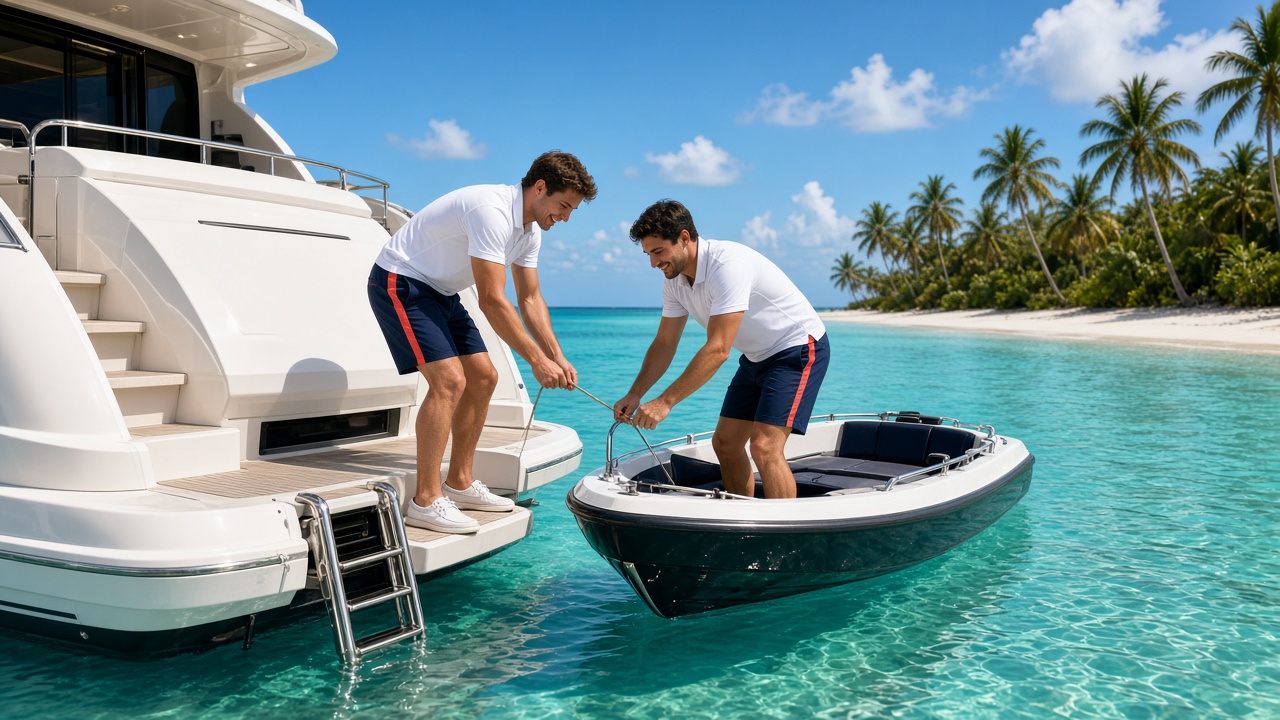
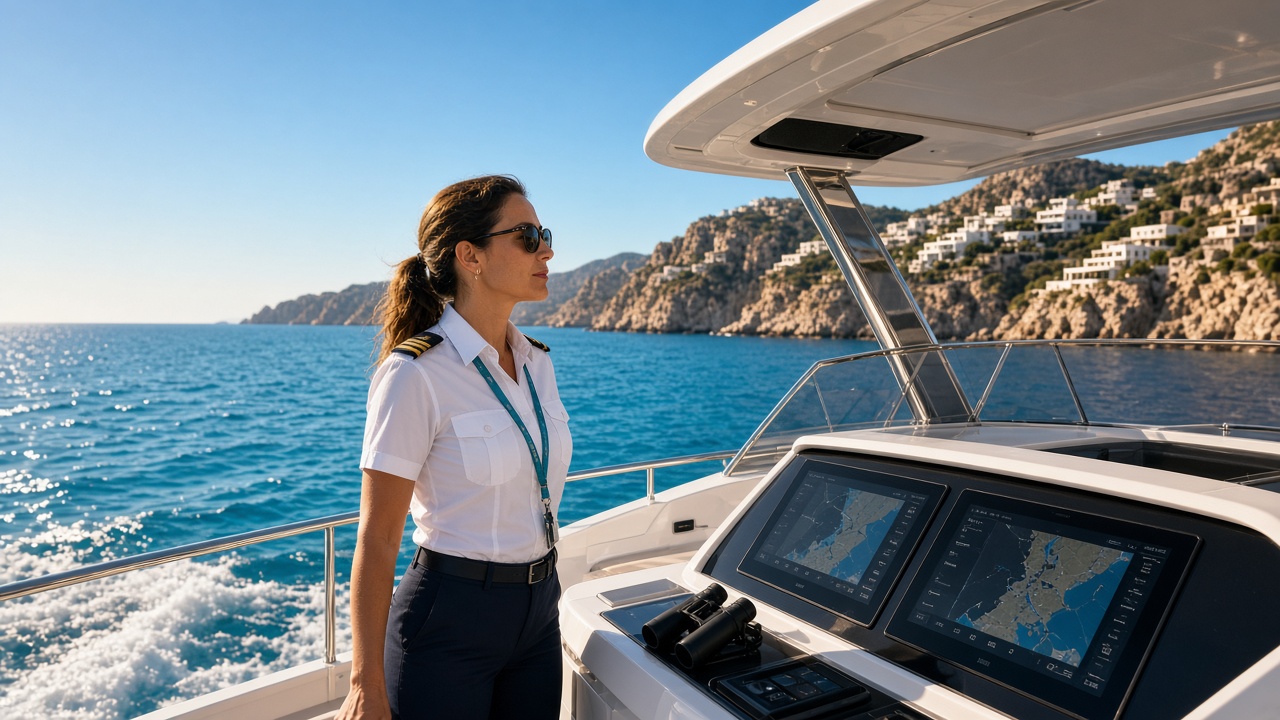
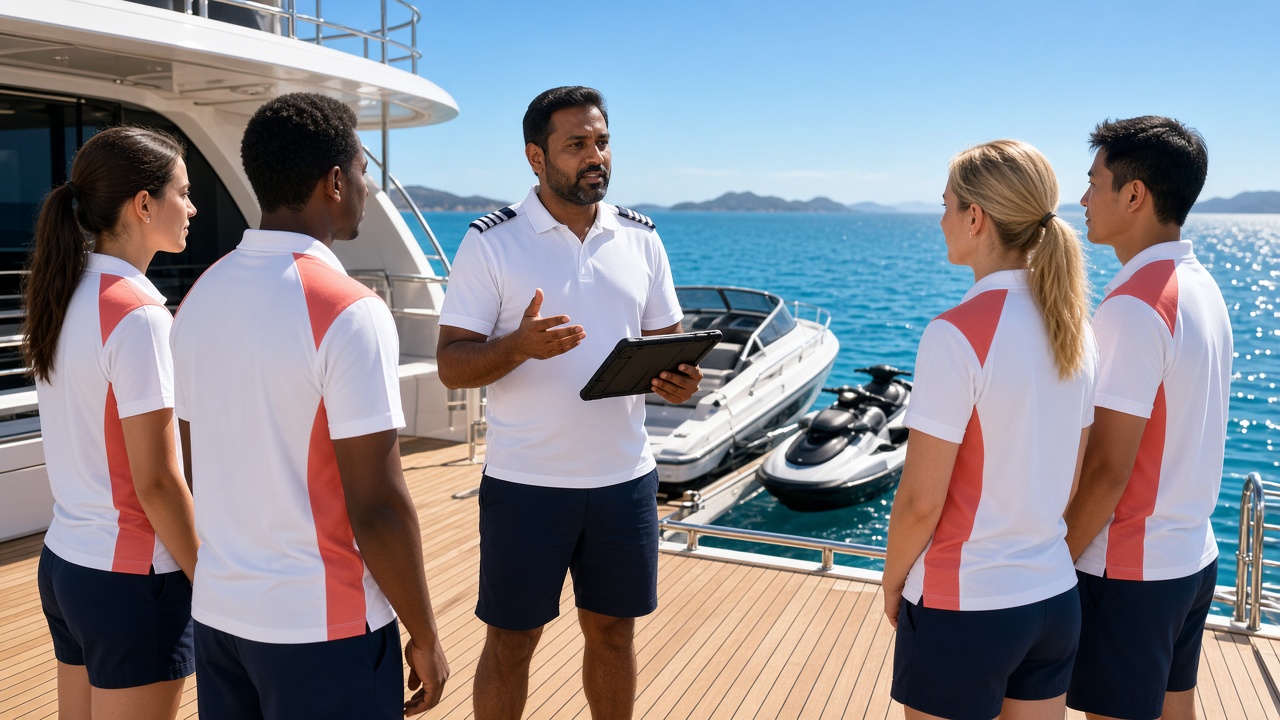
The way I describe it to people: a chief officer does three jobs at once. On the bridge, you're a senior watchkeeper, often on the 4-8 watch, and you draw up passage plans for the captain to approve. On deck, you manage the bosun and deckhands, set the daily job list and own the condition of the exterior, from teak and paint to tenders and toys. In the office, you run safety and compliance: drills, ISM paperwork, life-saving and firefighting equipment, and preparation for flag and class surveys. On many yachts you're also the Ship Security Officer.
How that mix feels depends hugely on yacht size. On a 40m yacht, the first mate is hands-on: driving the tender, sanding caprails with the crew, running the stern during a Med-moor. On an 80m yacht with several deck officers and a big deck team, the job tilts toward rotas, planned maintenance software and meetings with the other heads of department, and the bosun runs the deck day to day. Our Chief Officer / First Mate role guide has a full "day aboard" log on a 62m yacht if you want to see how a charter day really flows.
What I love about this role is that it's where leadership stops being theoretical. You're no longer judged on how well you polish stainless. You're judged on whether the deck team is safe, happy and productive, whether the drills are real rather than box-ticking, and whether the captain sleeps well when you're on watch.
What the role pays in 2026
Here's the good news: chief officer pay scales sharply with yacht size, and the top of the range is genuinely strong. Two respected 2026 benchmarks, both quoted as monthly salary before tips:
Yotspot's 2026 salary guidelines (EUR per month) list a chief officer / first mate at:
- €3,200–€4,500 on yachts under 30m
- €4,600–€5,000 on 40–49m
- €5,500–€8,000 on 50–59m
- €7,000–€10,000 on 70–79m
- €12,000–€15,000 on 90–99m
Northrop & Johnson's 2026 Yacht Crew Salary Guide (USD; no pay period printed, but typically read as monthly, as its 2025 edition was headed "Monthly Salary in Dollars") has chief officer / first mate at $4,500–$7,000 on 30–40m, $8,000–$9,000 on 50–60m, $9,000–$12,000 on 80–100m and $12,000+ on 100m+. It also notes that on yachts over 100m / 3,000 GT, crews typically distinguish between a chief officer and a first officer, with first officers on 100m+ at $7,500–$9,500.
Read those tables side by side and one thing jumps out. A chief officer on a 90m+ yacht can out-earn a captain on a small yacht. That's why some excellent officers deliberately stay as chief officer on big boats for years, often on rotation, rather than rushing into a first command on a 35m. Neither choice is wrong. It depends on whether you want command or a big department with a life ashore built in.
One more thing on money. Tips are a bonus, not a salary. With MYBA's 2026 guidelines now stressing that gratuities are at the charterer's discretion and never to be solicited (we covered that in our Caribbean season piece), compare offers on base pay, rotation, leave and conditions first.
The tickets you need
Most of the industry works to the UK Maritime and Coastguard Agency's framework, so I'll use that. Always check what your yacht's flag state actually requires.
Under MSN 1858 (Amendment 2), the classic chief officer ticket is the Chief Mate (Yachts less than 3,000 GT) Certificate of Competency. To get it, you need to:
- hold an OOW (Yachts less than 3,000 GT) CoC, or have completed all the requirements for it
- hold an RYA Yachtmaster Ocean with the shore-based Ocean course, or an IYT Master of Yachts Unlimited
- hold the required ancillary safety and technical certificates
- hold a valid ENG1 medical (or accepted equivalent)
The ancillary table in Section 6 of the MSN is where people get caught out. For Chief Mate (Yachts <3,000 GT), it includes the four STCW basic training modules, Proficiency in Survival Craft and Rescue Boats, Advanced Fire Fighting, Medical First Aid, ECDIS, GMDSS GOC and HELM (Management). Several of those need updating every five years, so keep an eye on your dates.
On smaller yachts under 500 GT, a Master 200 GT or OOW 3,000 GT is often enough for a first mate role. On yachts between 500 GT and 3,000 GT, most captains will expect the Chief Mate 3,000 GT. Above 3,000 GT, things get interesting, which brings us to the news.
The new ceiling: Yacht Unlimited
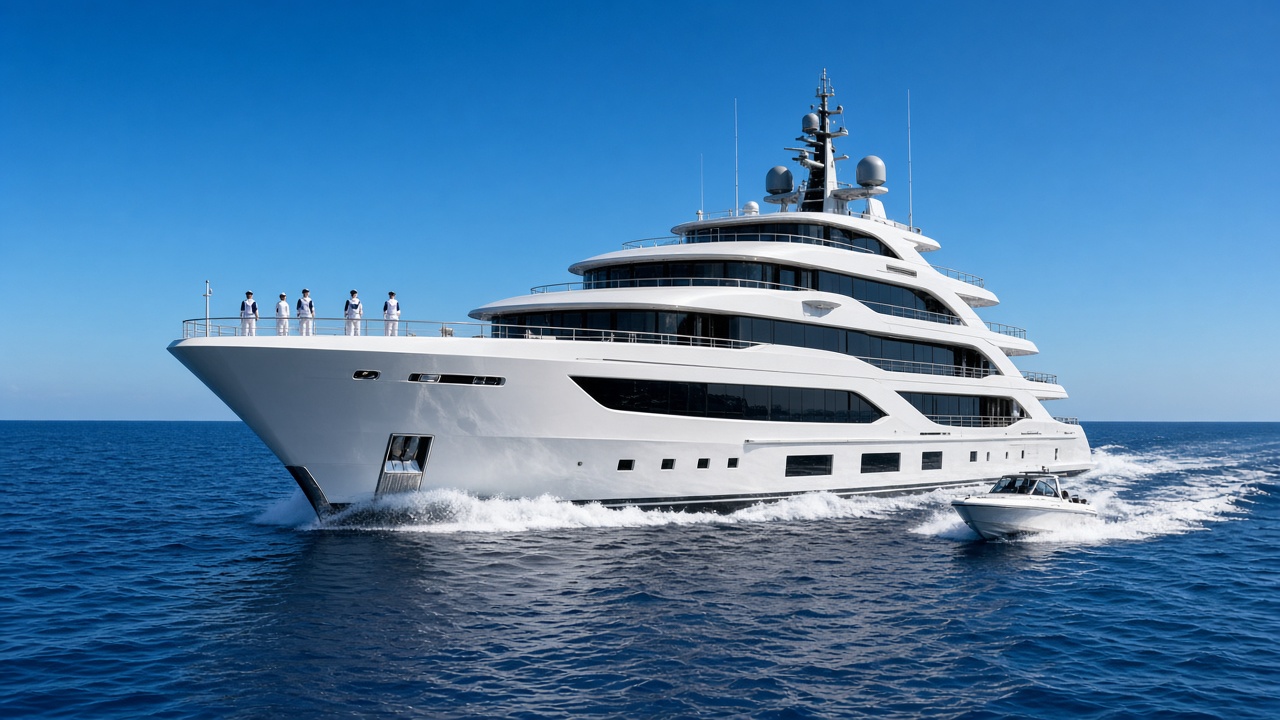
On 18 May 2026, the MCA launched the Yacht Unlimited Certificate of Competency. It creates two new tickets, Chief Mate (Yachts) Unlimited and Master (Yachts) Unlimited, which let deck officers serve as chief mate or master on yachts of any size, including those above 3,000 GT, without first going off to earn time on cargo ships.
Before this, the MCA itself said, the old route "frequently took many years to complete and proved unfeasible for many experienced professionals." The new tickets stay yacht-only, so they don't make you an unlimited master on a tanker, but within yachting the tonnage and area limits are gone.
For chief officers specifically, Section 4.3 of MSN 1858 sets out the Chief Mate (Yachts) Unlimited route. You need either a Master (Yachts) less than 3,000 GT CoC, or an OOW Unlimited CoC plus at least 12 months' onboard yacht service as OOW (including 6 months' seagoing) on yachts of at least 500 GT, with NAEST (Management). Then you complete nine management-level academic modules at an MCA-approved nautical college, including Management of Yacht Operations, Marine Engineering Systems, Ship Stability and Shipmaster's Law and Business. You pass the MCA assessments in Chief Mate Navigation and Stability (Yacht Unlimited), hold an ENG1 and pass the oral. Holders of an approved management-level qualification such as an HND or Foundation Degree don't need to repeat the modules.
From there, Master (Yachts) Unlimited needs 12 months as chief mate (6 at sea) on yachts of 500 GT or more. As Legal 500's summary points out, there are three routes in, and serving Masters (Yachts) under 3,000 GT can get there with just six months as master (three at sea) on a 500 GT+ vessel.
Why does this make me so optimistic? Because the biggest yachts need the biggest, most senior bridge teams, and now there's a ladder to the very top that keeps talent inside yachting rather than losing it to merchant shipping for years. For a chief officer on a 60m today, the long-term ceiling just moved a lot higher.
Advice for officers chasing the role
If I were a second officer or bosun aiming at chief officer right now, here's what I'd do.
Map your tickets against your target yacht. A first mate on a 30m sailing yacht and a chief officer on a 90m motor yacht are different hires. Know which CoC the boats you want actually need.
Log sea time like it's money. Every route above is built on documented service on the right size of vessel. Keep your discharge book and testimonials tidy and signed as you go.
Build a leadership track record. Captains hire chief officers they trust. References that show you can lead a deck team without friction, run proper drills and keep a tidy deck matter as much as the certificate.
Get fluent in the office side. ISM, planned maintenance software and survey prep are a big part of the job on larger yachts. If you can make compliance calm and organised, you stand out.
Decide early whether you want command or a big department. Both are great careers. They just need different plans for the next five years.
Advice for captains and hirers
For captains, managers and owners hiring a chief officer this winter, my advice is simple. Hire for judgment first. The ticket tells you someone met a standard; the references tell you how they behave at 3am with a dragging anchor and a tired crew. Check sea service and certificates properly, ask how they run drills, and talk to the bosun or deckhands who've worked for them if you can.
Also think about the Yacht Unlimited route as a retention tool. A good chief officer on a 500 GT+ yacht can now see a clear path to Master (Yachts) Unlimited without leaving the industry. Supporting that path, with study leave or help with module costs, is a strong way to keep a future captain in your programme.
My take
The chief officer is the hinge of every good yacht. Get the right one and the deck runs smoothly, the bridge is safe, guests have a brilliant time and the captain can plan ahead instead of firefighting. In 2026 the pay is strong, the certification path is clearer than it's ever been, and the ceiling has just been lifted.
If that's the job you're aiming for, start planning today. Browse the latest chief officer and first mate jobs on SuperyachtRoles.com, and read our deck jobs guide from deckhand to captain and the bosun guide for the rungs either side.
Sources
- Legal 500 / Sentient International, A New Route To Command: The MCA Yacht Unlimited Certificate of Competency 2026, 3 November 2026
- UK Maritime and Coastguard Agency, Yacht Unlimited Certificate of Competency launch, 18 May 2026
- UK Maritime and Coastguard Agency, MSN 1858 (M+F) Amendment 2
- Yotspot, Salary Guidelines 2026
- Northrop & Johnson, 2026 Yacht Crew Salary Guide