Superyacht Captain Jobs 2026: What the Role Does and Pays
What a superyacht captain does in 2026, what command pays by yacht size, the MCA tickets you need, and the new Master (Yachts) Unlimited route to the top.
We've climbed the whole deck ladder in this what each role does series, from deckhand to captain, then stopped on the bosun and the chief officer. Today we reach the top: the captain.
It's a brilliant week to write about command. On 3 November, Legal 500 published Sentient International's explainer, A New Route To Command: The MCA Yacht Unlimited Certificate of Competency 2026, and its key line says it all: superyacht officers no longer need to leave yachting to qualify for the largest vessels. For anyone dreaming of commanding a 100m-plus yacht, that's huge. Here's what captains really do, what they earn, and how the new route works.
What a superyacht captain actually does
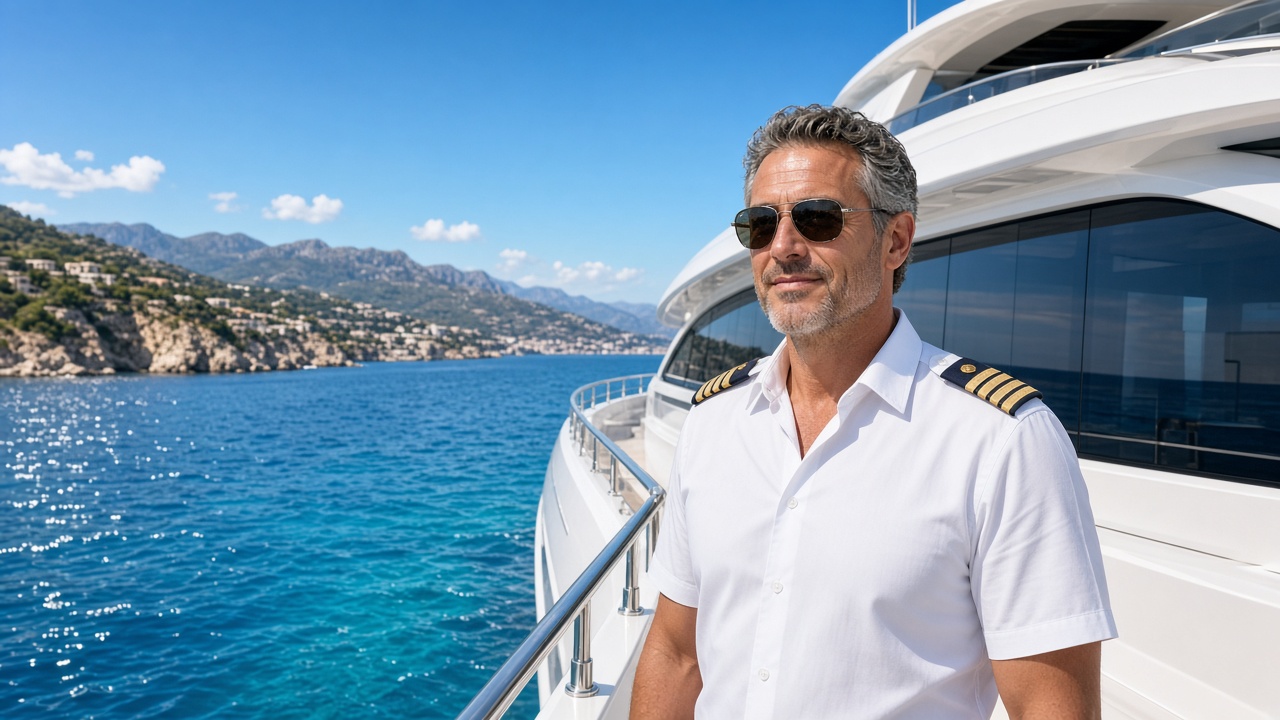
People imagine the captain at the helm, steering into Monaco at sunset. That happens, but most days the captain is closer to the CEO of a small, very luxurious floating hotel that also happens to be a ship. I think of the job as five roles stacked together.
The owner's trusted adviser. The captain is the owner's main point of contact on board, and often the person who turns an owner's wishes ("we'd love to be in the Maldives for New Year") into a realistic plan with costs, weather windows, berths and crew to match. On many yachts there's also a management company, an owner's representative or a family office in the loop. Great captains say "no" diplomatically when safety or the budget demands it, and never surprise the owner with bad news they could have flagged early.
The budget holder. The captain usually builds and manages the operating budget with management: crew payroll, fuel, berthing, maintenance, refit planning and provisions. On charter, the captain also oversees the Advance Provisioning Allowance (APA), the money the charterer deposits to cover running costs like fuel, food and berths, and accounts for it at the end of the trip. Transparent accounts build trust faster than anything else.
The person ultimately responsible for safety. The buck stops with the master. On larger commercially operated yachts, the ISM Code requires a safety management system, and the captain is the one making it real: drills that actually train people, risk assessments that reflect how the yacht is used, a working relationship with the Designated Person Ashore, and the professional confidence to use the master's overriding authority when it's needed. Add flag and class surveys, MLC compliance and crew rest hours, and the office side of command is big.
The leader of the crew. The captain sets the culture: how heads of department work together, how mistakes are reported, whether juniors get mentored, and whether good people stay. This is what separates average captains from brilliant ones. As we found in our crew retention piece, crew rarely leave yachts; they leave leaders.
The face of the charter. On charter, the captain briefs guests, shapes the itinerary around their mood and the weather, and makes a hundred decisions guests never see. Departure times, anchorages and noise affect crew sleep too, a point Captain Luc Osstyn of the 80m BATELLO made at a Monaco Yacht Show panel reported by Superyacht Guide. Rested crew deliver five-star charters. Exhausted crew don't.
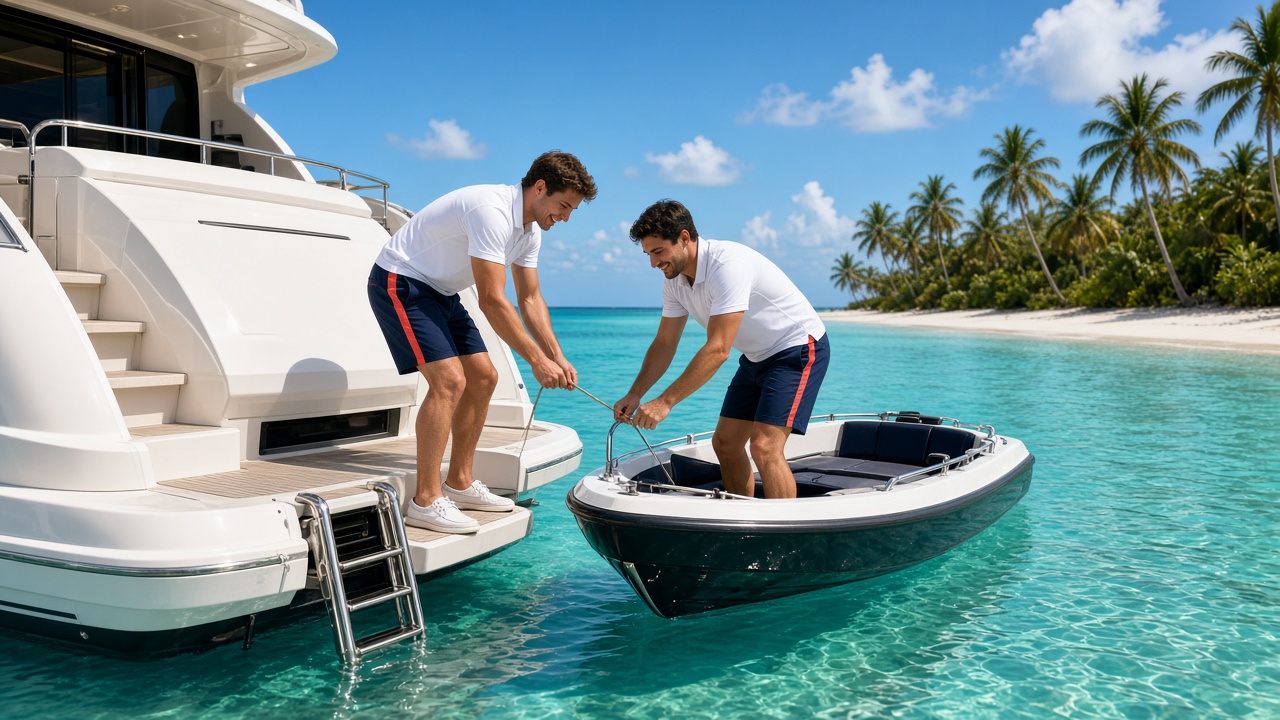
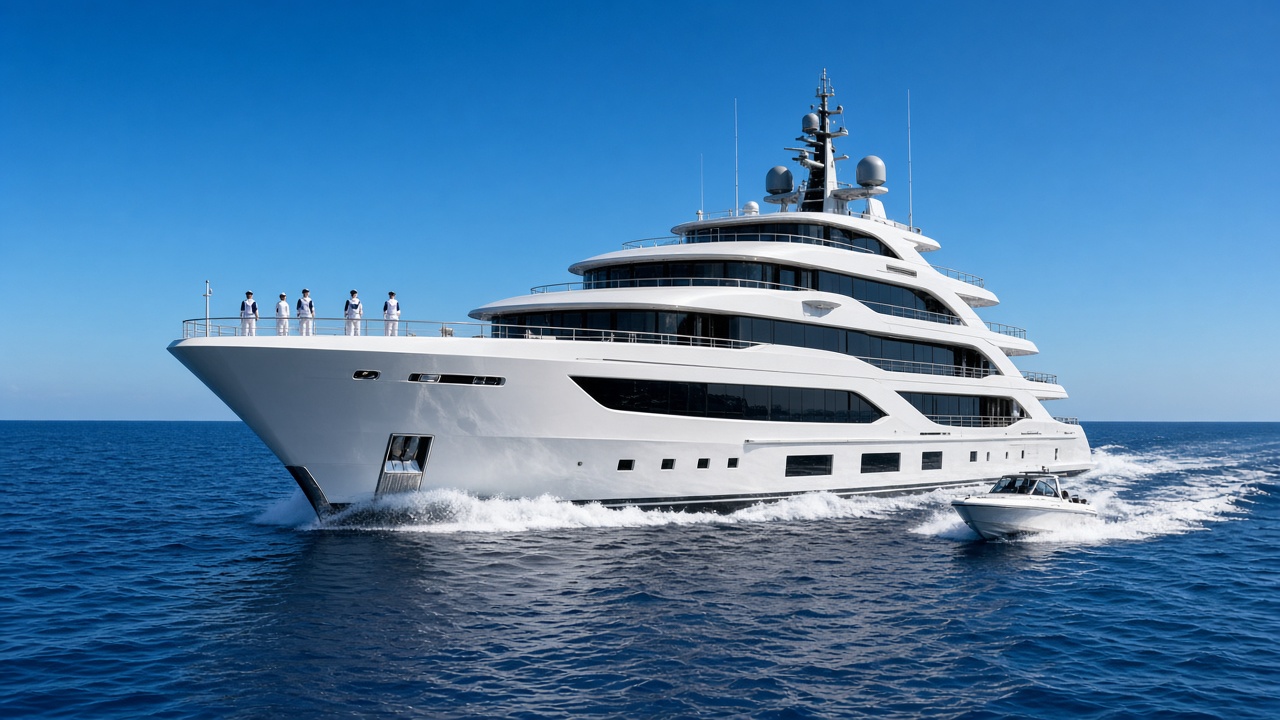
On a 35m yacht you're hands-on, doing the paperwork at the saloon table and sometimes helping with lines. On an 80m yacht you lead officers and heads of department, and the day is about planning, people and decisions.
What captains earn in 2026
Captain pay is the clearest example in yachting of how responsibility scales with size. Three current 2026 benchmarks, all quoted as monthly salary before tips:
Yotspot's 2026 Salary Guidelines (EUR per month):
- €5,000–€6,000 on yachts under 30m
- €6,000–€9,000 on 30–39m
- €9,000–€13,000 on 40–49m
- €11,000–€16,000 on 50–59m
- €15,000–€18,000 on 60–69m
- €16,000–€20,000 on 70–79m
- €18,000–€21,000 on 80–89m
- €20,000–€23,000 on 90–99m
Northrop & Johnson's 2026 Yacht Crew Salary Guide (USD) doesn't print a pay period, but its 2025 edition was headed "Monthly Salary in Dollars" and these ranges sit on the same scale as the monthly guides, so read them as monthly. It lists captains at $9,800–$12,250 under 30m, $9,800–$16,375 on 30–40m, $13,000–$20,500 on 40–50m, $16,400–$24,500 on 50–60m, $19,600–$32,750 on 60–80m and $26,200–$32,800 on 80–100m, with 100m+ marked as discretionary.
Superyacht Guide's August 2026 roundup has €16,000–€23,000 at 80–100m, and says packages above 100m are generally negotiated individually and commonly include equal rotation.
My read: the published ranges stop around 100m because every package beyond that is bespoke, and the step from 50m to 80m-plus is where pay really accelerates. The new unlimited ticket opens the very top of that range to yacht-trained officers.
One caution: a monthly figure means little without the leave pattern. A permanent role and an equal rotation are very different jobs at the same headline number, so compare rotation, leave, flights, medical cover and training support too.
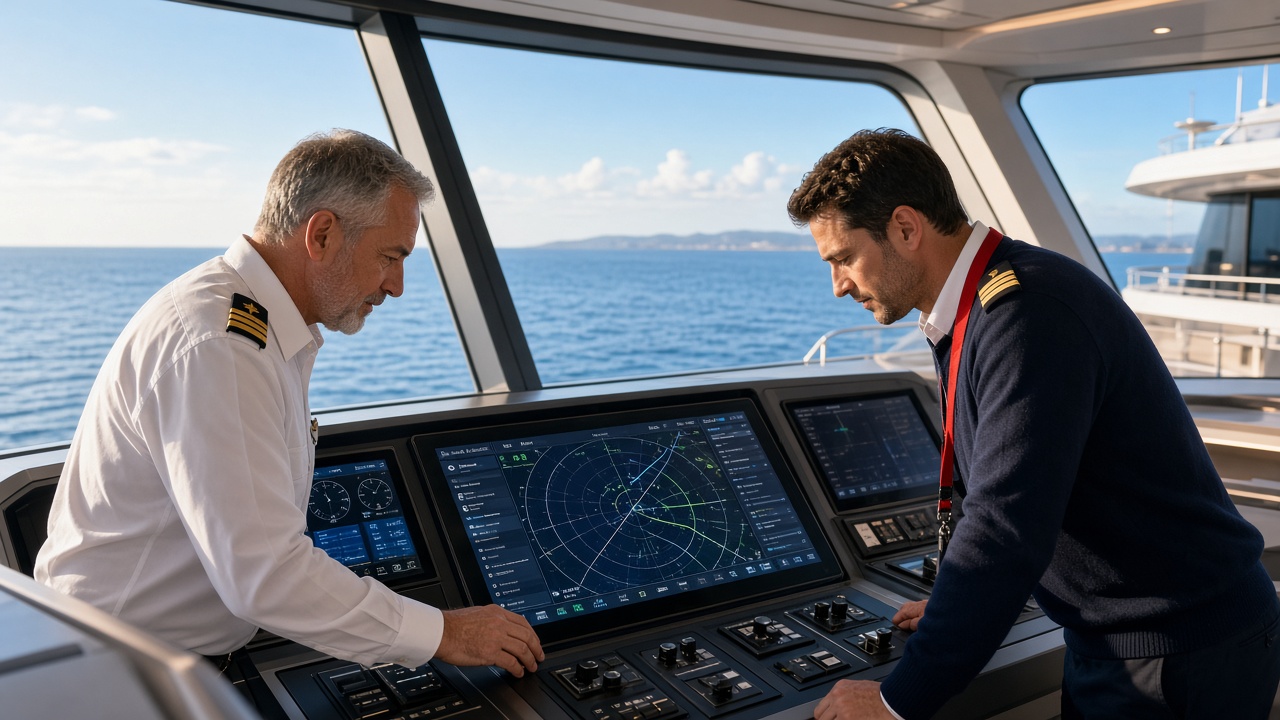
The classic route to command
Most of the industry works to the UK MCA framework in MSN 1858 (Amendment 2), so that's what I'll use. Always check what your yacht's flag state actually requires.
The first command ticket for most officers is Master (Yachts) less than 500 GT. Under section 3.5 you need an OOW (Yachts less than 3,000 GT) CoC, then at least 12 months' onboard yacht service as a deck officer, including at least 120 days' watchkeeping, on vessels of 15m or more. You complete the MCA modules in Seamanship and Meteorology, Stability, Business and Law, and Navigation, Radar and ARPA Simulator, pass Celestial Navigation, and then the oral.
The next step is Master (Yachts) less than 3,000 GT. Section 3.6 asks for at least 24 months' onboard yacht service as a deck officer while holding the OOW ticket, including at least 240 days' watchkeeping, with 12 months on vessels of 24m or more or 6 months on vessels of 500 GT or more. Then the Master 3,000 GT oral. The ancillary table adds the Medical Care certificate for master-level tickets, on top of the safety, ECDIS, GMDSS and HELM (Management) courses your chief mate ticket needed.
A detail that catches people out: once you serve as master, your testimonials must be signed by the owner or a responsible person from the management company, such as a director or yacht manager. Build that habit from day one.
The new ceiling: Master (Yachts) Unlimited
Here's the big one. On 18 May 2026, the MCA launched the Yacht Unlimited Certificate of Competency. It lets holders serve as Chief Mate or Master on yachts of any size, including those above 3,000 GT, anywhere in the world, without interrupting their careers to gain experience on cargo ships. Before this, the MCA said, the old route "frequently took many years to complete and proved unfeasible for many experienced professionals." The new certificates are yacht-restricted, so they don't make you master of a tanker, but within yachting the tonnage and area limits are gone, provided flag and safe manning requirements are met.
Section 4.4 of MSN 1858 sets out the Master (Yachts) Unlimited CoC. Every candidate must hold or meet the requirements for Chief Mate (Yachts) Unlimited, which means the nine management-level modules at an MCA-approved nautical college (including Management of Yacht Operations, Marine Engineering Systems, Ship Stability and Shipmaster's Law and Business) and the MCA assessments in Chief Mate Navigation and Stability (Yacht Unlimited). Holders of an approved management-level qualification such as an HND or Foundation Degree don't need to repeat the modules. Then there are three routes for sea service:
- From Master (Yachts) less than 3,000 GT: at least 6 months' onboard yacht service as master, including at least 3 months at sea, on a vessel of at least 500 GT. You're exempt from the Chief Mate oral but must pass the Master oral.
- From Chief Mate (Yachts) Unlimited or Chief Mate Unlimited: at least 12 months' onboard yacht service as chief mate, including at least 6 months at sea, on yachts of at least 500 GT.
- From OOW Unlimited: 36 months' onboard yacht service as OOW, including at least 15 months at sea, on vessels of 15m or more, with the seagoing service on vessels of at least 500 GT.
All three also need the ancillary certificates, an ENG1 and the Master Unlimited GT Yacht oral.
Route one excites me most. A captain on a 500 GT-plus yacht with a Master 3,000 GT ticket could be six months of command service plus the academic work away from the biggest yachts afloat. That rewards exactly the people who've built their careers in yachting.
How I'd plan a path to command
Pick your target size early. A first command on a 35m and a career aimed at 100m-plus are different plans.
Treat sea service as your currency. Every route above is built on documented service on the right size of vessel. Keep your discharge book and testimonials tidy and signed as you go, as Legal 500's own next steps recommend: verify your sea service, talk to an MCA-approved college about the modules, and update your CV with your target certificate.
Build the business brain. Budgets, APA accounting and owner reporting are a big part of command. Ask your captain to let you shadow the budget.
Lead people well, and get references that say so. Owners hire captains they trust with their asset, guests and crew. A calm, safe, happy bridge is worth more than any single ticket.
Use the tech. AI assistants such as Grok Bot, Claude or ChatGPT can help draft budgets, voyage reports and crew briefings faster. Use them to free up time for the human side of the job, and check the output yourself.
For owners and managers hiring a captain
Hire for judgment, leadership and honesty first. Check certificates and sea service properly, talk to former heads of department, and ask how the candidate handles a budget overrun or a tired crew. And think of the Yacht Unlimited route as a retention tool: as Sentient puts it, owners can now keep experienced captains and officers as their vessels grow. Supporting a trusted captain or chief officer through the modules could be the best investment your programme makes this year.
My take
The captain's job has never been bigger: part mariner, part CEO, part host, part coach. But the path has never been clearer, and in 2026 the ceiling has lifted for yacht-trained officers. If command is your goal, start planning now.
Browse the latest captain and senior deck jobs, and see our crew salaries guide for the rest of the crew.
Sources: Legal 500 / Sentient International, 3 November 2026; MCA announcement and MSN 1858 (Amendment 2), 18 May 2026; Yotspot Salary Guidelines 2026; Northrop & Johnson 2026 Yacht Crew Salary Guide; Superyacht Guide, 31 August and 21 October 2026.