Superyacht Chef Jobs 2026: From Crew Chef to Head Chef
Superyacht chef careers in 2026: what each galley role does, the MLC Ship's Cook Certificate, real salary data, rotation and how to land your first galley job.
Ask any captain what makes or breaks a charter and most will give you the same answer within about ten seconds: the food. Guests forgive a rainy day. They don't forgive a bad dinner. That makes the galley one of the most influential departments on any superyacht, and in 2026 it's also one of the best-paid places for a talented cook to work anywhere in the world.
This is the next instalment in our careers series, after deck, interior and engineering. I'll walk through who does what in a yacht galley, the certificate that actually matters, what the published salary data says, and my honest advice on getting your first role. If you're a restaurant chef staring down another grey winter of split shifts, read this one closely.
Who's who in the galley
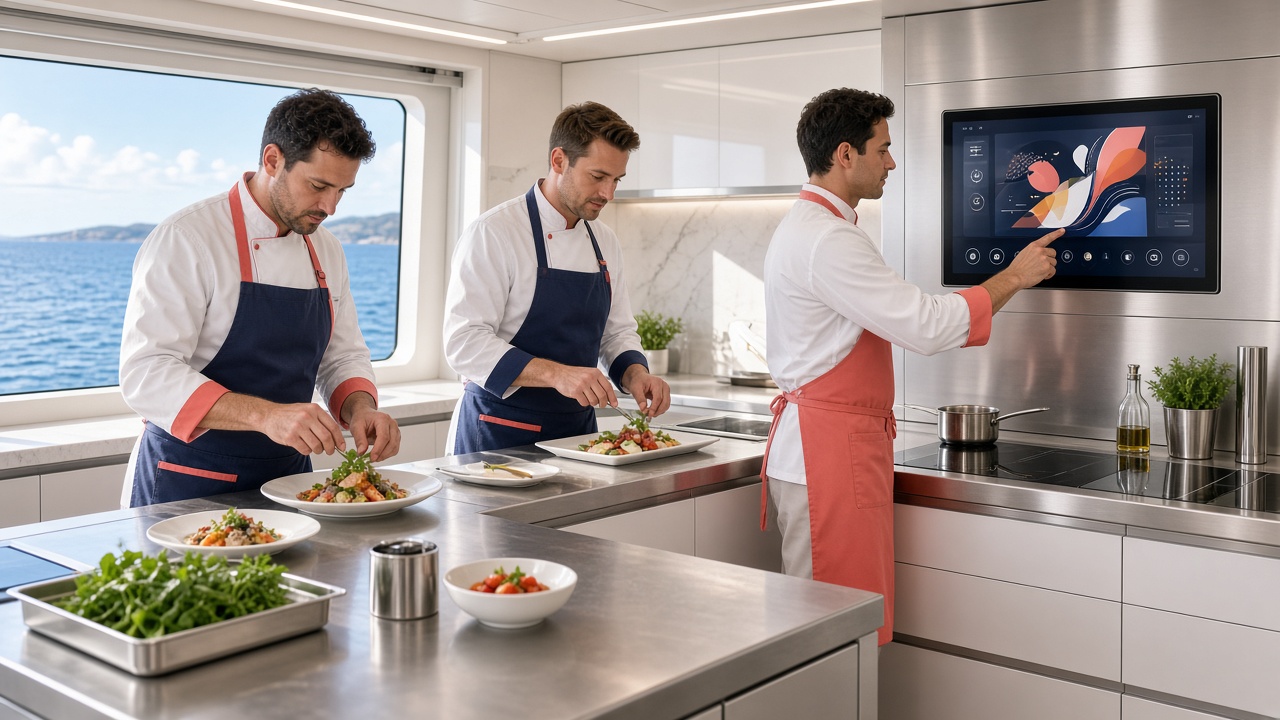
On a yacht under about 50 metres there's usually one person in the galley: the Sole Chef. You cook for the guests and the crew, plan every menu, do all the provisioning, manage the budget and keep the galley spotless and compliant. It's a huge job, and the best sole chefs are part chef, part logistics manager, part diplomat.
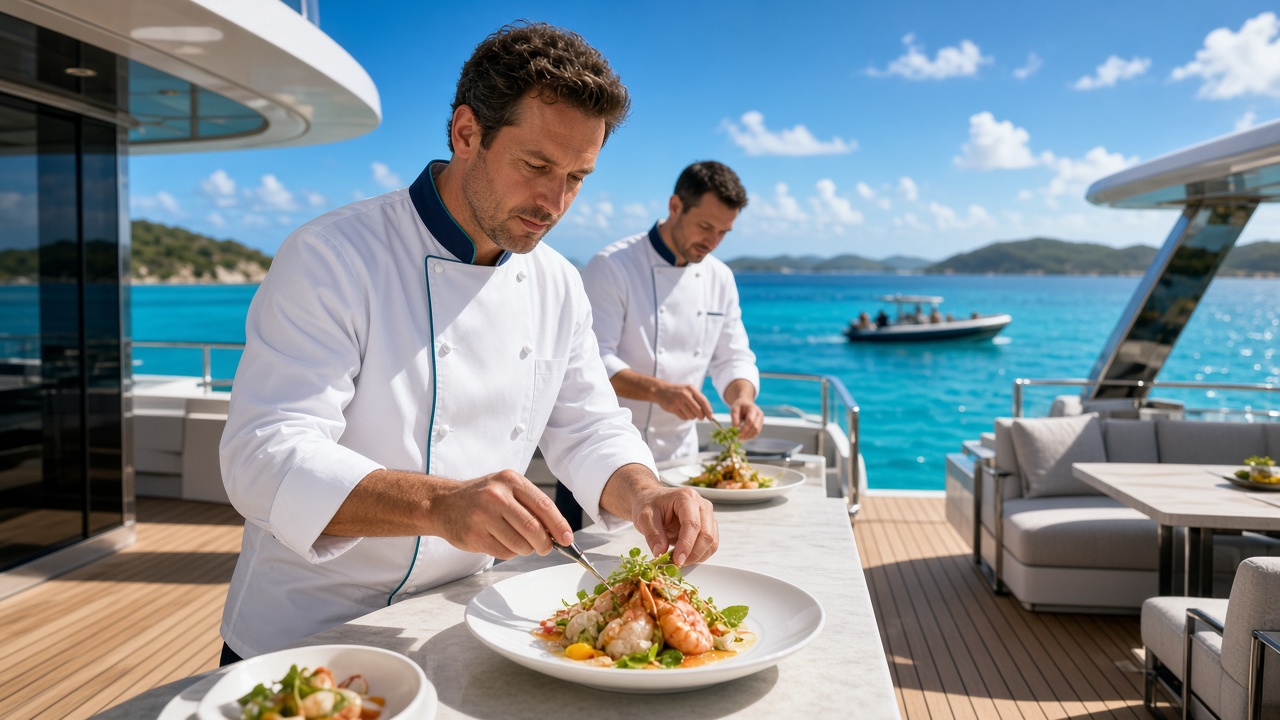
Once yachts get bigger, the galley becomes a brigade:
- Head Chef (Executive Chef on the largest yachts). Owns the guest experience on the plate. Menu design, guest preference sheets, provisioning across multiple countries, budgets, food safety systems and leading the team. On a 100m+ yacht this is genuinely a management role, closer to running a small luxury restaurant that moves.
- Sous Chef. The head chef's right hand. Runs service when the head chef is off, often owns pastry or a particular section, and takes on more of the guest cooking as they progress.
- Crew Chef / Third Chef. Feeds the crew, who on a large yacht can number 30, 40 or more people with their own dietary needs, shift patterns and very strong opinions about curry night. Never underestimate this job. Crew food is the single biggest morale lever on board, and a great crew chef is loved by everyone.
- Cook/Stew or Cook/Deck. On smaller yachts you'll see combined roles where you cook and also help in the interior or on deck. It's a common entry point.
A typical charter day for a sole or head chef starts early with breakfast and pastries, moves through a guest lunch, crew meals, an afternoon of prep, and a multi-course dinner that may have been redesigned at 4pm because the guests decided they fancy Japanese tonight. In between, you're chasing deliveries from a provisioner in a port where you don't speak the language. ChefYachtClub, which tracked around 800 real chef roles between 2022 and September 2026, puts it simply in its 2026 salary guide: up to about 50m the chef is usually solo, and past that the galley splits into a team of head, sous and crew chefs.
The certificate you actually need: the Ship's Cook Certificate
Here's where a lot of brilliant shore chefs get caught out. Being a great cook isn't enough on its own. On many yachts you also need to be a qualified ship's cook under the Maritime Labour Convention (MLC 2006).
For UK and Red Ensign yachts, the rules sit in the MCA's MSN 1846 (M). The key points:
- When it's required. A qualified ship's cook must be carried unless the ship only operates within 60 miles of a safe haven, or ordinarily operates with fewer than 10 seafarers on board. The MCA is explicit that the requirement "is not based on tonnage but on the number of crew carried." The regulations also don't apply to pleasure vessels or to vessels not ordinarily engaged in commercial activities, so a purely private yacht may be treated differently. In practice, if you want to work on larger yachts and charter yachts, you want this certificate.
- To qualify you must be at least 18, have at least one month of sea-going service in any capacity, complete approved training against the notice's learning outcomes, hold the STCW basic safety courses (personal survival techniques, fire prevention and fire fighting, elementary first aid, personal safety and social responsibility) plus security awareness, and hold a current ENG1 medical or equivalent.
- Good news for experienced chefs. The MCA notes that minimum sea time was cut from five years to one month, and if your culinary training wasn't designed around the MCA syllabus, you can apply for accreditation of prior learning through IAMI rather than starting from scratch.
- Other flags count too. Ship's cook certificates issued by other administrations after they ratified the MLC are accepted as equivalent on UK ships, provided you also hold the basic safety training and a medical.
Even if you're not the qualified cook, anyone processing food in the galley must be trained in food and personal hygiene and safe food handling. On a superyacht that often includes stews who help with breakfast or crew meals.
You can see how much the market cares about this in live adverts. A Quay Crew galley listing from 23 October 2026 for a sole chef on a 50m Mediterranean yacht, at €7,000 a month with 60 days' leave, lists one qualification: "Ships Cook". That's the reality. No ticket, no interview.
My tip: sort your STCW basic safety, ENG1 and Ship's Cook Certificate before you fly to Antibes or Fort Lauderdale. A chef who can join tomorrow beats a slightly better chef who needs three weeks of paperwork, every single time.
What yacht chefs actually earn in 2026
I only want to quote real numbers, so these come from published 2026 agency guides. YPI CREW's chef salary guide and Cara Lees Yacht Crew's 2026 guide publish the same bands. All figures are monthly in euros, and the lower ends often apply to people new to yachting:
- Head Chef / Sole Chef: €4,500–6,000 (below 30m), €5,000–7,500 (30–40m), €6,000–9,000 (40–50m), €6,500–9,000 (50–60m), €7,000–9,000 (60–80m), €9,000+ (80–100m), €10,000+ (100m+)
- Sous Chef: €4,000–5,000 (40–50m), €4,500–6,000 (50–60m), €5,000–6,000 (60–80m), €6,000+ (80m+)
- Third Chef: €4,500–5,500 (80m+)
ChefYachtClub's data, based on real advertised and placed roles, gives a useful second view. It reports median monthly pay (net, live-aboard, before tips) of about €5,000 for crew chefs, €5,500 for sous and sole chefs, and €8,250 for head chefs, with the highest salary it recorded at €13,000 a month. It also puts typical freelance day work at around €250 a day, with the top tenth of day work paying €500 or more.
Two things jump out at me. First, the gap between a crew chef and a sous chef is smaller than most people think, so don't turn your nose up at a crew chef role on a big yacht. It's often the fastest door into a brigade. Second, as ChefYachtClub points out, a strong sole chef moving onto a bigger yacht may need to "step down in title and pay before you step up." Play the long game. For pay across every department, see our 2026 crew salaries guide.
Rotation has changed the galley for good
This is the trend I'm most excited about. Galleys have a reputation for burning people out, and the industry is finally doing something about it. YPI CREW says the move to structured 2:2 rotation has "fully consolidated" in 2026, applying "at every level of the galley hierarchy," and that yachts offering it "consistently secure stronger candidates."
YPI also says salary alone rarely wins the best chefs any more. Work-life balance, stability and a respectful, well-run environment are the deciding factors, because top chefs now have options across yachts, private households and five-star hospitality.
ChefYachtClub's maths on this is worth remembering: a 2:2 rotation paid the same monthly figure as a full-time role is worth roughly double per day worked. When you compare offers, put the leave next to the salary. A €6,500 job with 2:2 rotation can beat a €7,500 job with 30 days' leave by a mile.
What separates great yacht chefs
From the agency guides and the captains I talk to, it comes down to a handful of things:
- Range. YPI calls global culinary versatility "non-negotiable" for head chefs, from Japanese to Italian, Middle Eastern to Nordic. Guests arrive with global palates.
- Dietary confidence. Plant-based, keto, allergies, religious requirements, children who eat only beige food. You need to handle all of it calmly and safely.
- Provisioning genius. Finding perfect produce in a remote anchorage is a skill. Build supplier contacts everywhere you go.
- Calm under pressure. Menus change. Guests arrive early. Ovens fail at sea. The chefs who thrive stay smiling.
- Tech-savvy organisation. Digital menu planning, guest preference profiles, inventory and allergen tracking. I fully expect smart tools and AI-assisted planning to become standard in yacht galleys over the next few years. They won't cook the turbot, but they'll free up hours for the creative work only a chef can do.
How to land your first yacht chef job
- Get your paperwork done first: STCW basic safety, ENG1, food hygiene and the Ship's Cook Certificate.
- Build a cracking food portfolio. Bright, well-shot photos of your plates and a few sample menus across cuisines and dietary styles. Captains and chief stews skim fast.
- Start where the door is open. Crew chef on a large yacht, cook/stew on a smaller one, or day work and charter cover to build sea time and references.
- Time it with the season. Right now, at the start of November, yachts are crewing up for the Caribbean winter. Quay's October listings included a crew chef role on a 45m yacht starting 2 November through April 2027 and a sous chef role on a 55m dual-season yacht. That's live demand.
- Stay a full season. Longevity is the thing every agency says captains look for, in the galley as much as anywhere.
Being a yacht chef isn't an easy life, but it's a remarkable one. You cook with the best produce in the world, in the most beautiful places on the planet, and you're paid properly for it. With rotation now standard, it's more sustainable than ever. When you're ready, browse live superyacht chef jobs and start building your path to head chef.